

Processed food
Export tea
Assam, Darjeeling, Nilgiri and CTC tea. You need a Tea Board exporter licence; residues and GI rules matter.
- HS code
- 0902 Tea, whether or not flavoured. Black tea in bulk is 0902.40; in packets of 3 kg or less, 0902.30; green tea, 0902.10 and 0902.20.
- Export policy
- Free to export Free under ITC(HS). Exporters must hold an exporter licence from the Tea Board under the Tea (Distribution and Export) Control Order, 2005; since 2021 it is valid for 5 years and renewed online.
- Registrations
- 4 IEC, GST and those below
- India’s exports, 2025-26
- US$ 899 mn to 125 countries
What is exported
India exported 271.93 million kg of tea worth ₹8,349 crore in 2025-26 (Tea Board, final). North India (Assam, Darjeeling, Dooars) supplied about two-thirds. Tea Board’s last published country table (2020-21) shows Russia and other CIS countries, Iran, the UAE, the USA, the UK, Germany and China as the main buyers. Exports fell about 12% in April–August 2026 compared with a year earlier.
Varieties, grades and forms
- Assam CTC and orthodoxStrong, malty black tea; CTC for tea bags and milk tea, orthodox leaf for premium blends.
- Darjeeling (first and second flush)GI tea from 87 estates; sold by flush and garden name.
- NilgiriBright, brisk South Indian tea, often used in blends and iced tea.
- Green tea and speciality teasSmaller volumes; separate HS lines 0902 10 and 0902 20.
Where it is grown or made
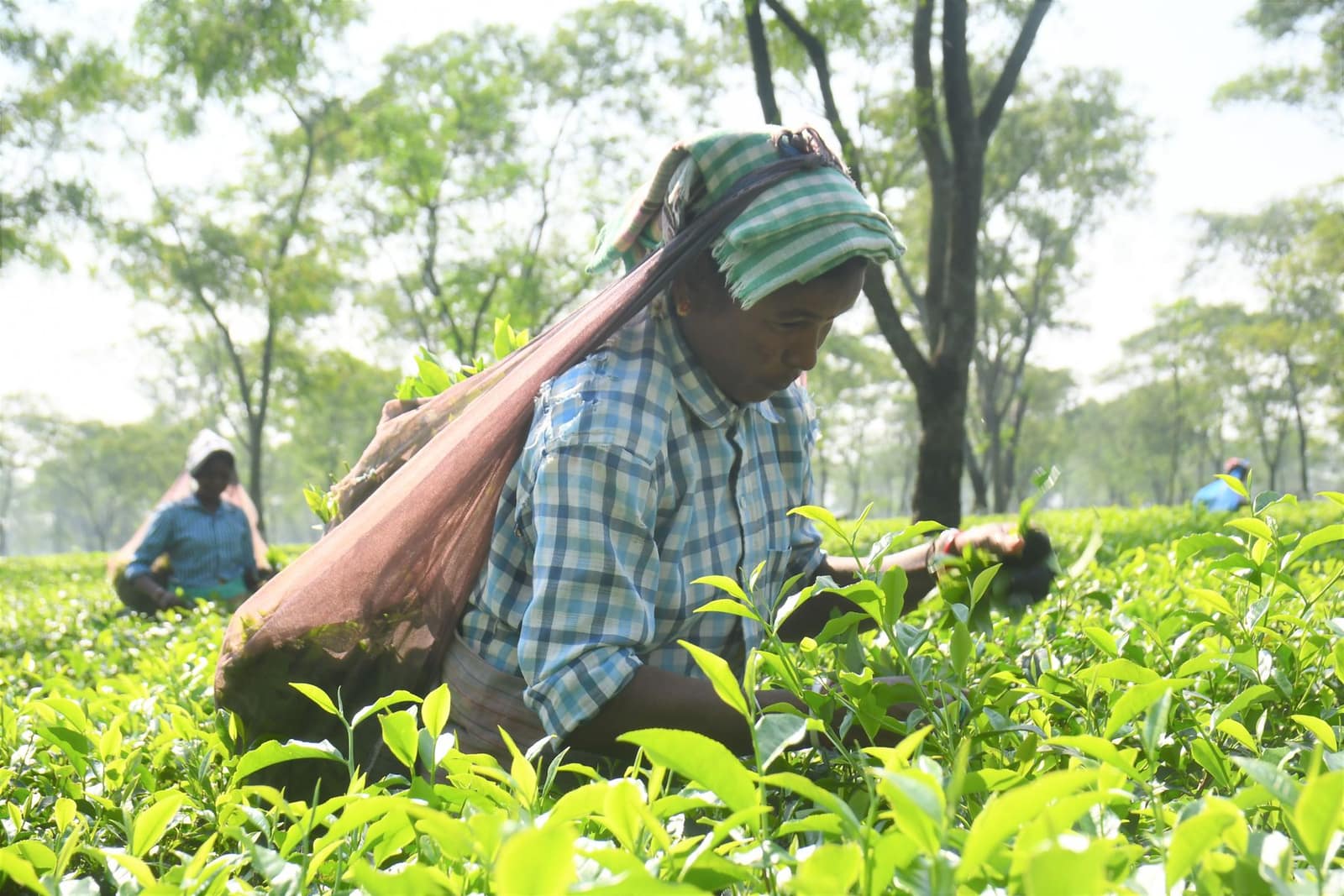
- AssamDibrugarh, Tinsukia, Jorhat, Golaghat, Sonitpur; Guwahati tea auction.
- West BengalDarjeeling hills (GI area), Dooars and Terai; Kolkata is the main auction centre.
- Tamil NaduNilgiris (Coonoor auction), Valparai.
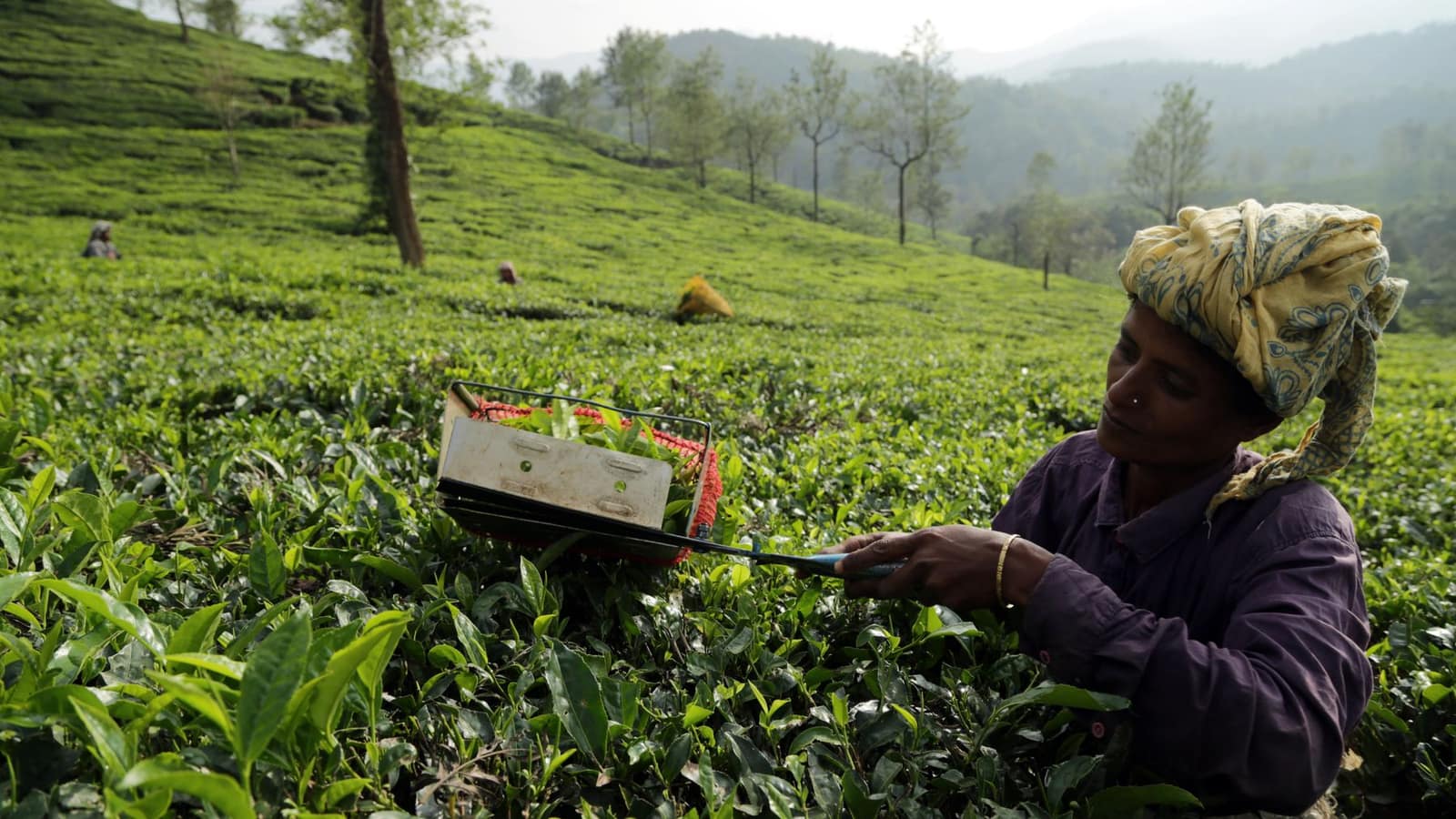
- KeralaMunnar (Idukki), Wayanad; Kochi auction.
The quality buyers ask for
- Manufacture
- CTC, orthodox, green; also white and oolong in small volumes
- Grades (orthodox)
- Leaf grades such as FTGFOP, TGFOP, FOP and OP; broken grades such as BOP and BOPF; fannings and dust
- Grades (CTC)
- BP, BOP, BOPSM, PF, PD and dust grades, sold by auction catalogue
- Standard
- ISO 3720 (black tea specification) is used in contracts; FSSAI sets the tea standard in India, with no added colour
- Residues and contaminants
- Pesticide residues and anthraquinone within destination limits; the EU and Japan are the strictest
- Quality
- Judged by tasters on liquor colour, strength, briskness and leaf appearance; buyers approve pre-shipment samples
Certificates
- Tea Board exporter licenceRequiredLicence under the Tea (Distribution and Export) Control Order, 2005, valid five years and renewed online.
- FSSAI licenceRequiredCentral licence from FSSAI for the premises where the food is packed or stored for export. Apply on FoSCoS.
- Darjeeling certification licenceOften askedOnly licensed exporters may sell tea as “Darjeeling”, with Tea Board certification of origin for each lot.
- Rainforest Alliance / FairtradeOften askedSustainability labels many UK and EU packers ask for.
- ISO 22000 / FSSC 22000Often askedFood-safety management system certification. FSSC 22000 is recognised by GFSI, which large retailers and brand owners look for.
- Organic (NPOP / NOP / EU)Often askedNeeded only if you sell the product as organic: NPOP certification by an accredited body, plus the buyer market’s own organic rules.
Shipping, storage and shelf life
Tea is light: a 20-ft container takes roughly 9–12 tonnes of CTC in multi-wall paper sacks, less of leafy orthodox grades.
Sea freight from Kolkata/Haldia, Kochi and Tuticorin; small specialty lots by air.
Dry, odour-free store; tea absorbs smells and moisture quickly. Keep foil-lined sacks sealed.
Black tea typically about two years when sealed; green and specialty teas are best within a year.
What goes on the pack and carton
- Bulk bags and cartons: product and grade, crop year, lot number, net and gross weight, “Product of India”, exporter name and the buyer’s shipping marks, matching the invoice and packing list exactly.
- Darjeeling tea must carry the Darjeeling logo and certification details only if the lot is certified; blends must not imply pure Darjeeling.
- EU retail packs (Regulation 1169/2011): name of the food, ingredients with allergens highlighted, net quantity, best-before date, storage conditions, the EU importer’s name and address, and origin where required — in the language of the country of sale.
- USA (21 CFR 101): product name, net quantity in both US and metric units, ingredients, allergens, name and place of business of the packer or distributor, Nutrition Facts unless exempt; and “Product of India” marking (19 CFR 134).
- Gulf countries: Arabic text (Arabic plus English is normal), production and expiry dates, net weight, country of origin and the importer’s details. Confirm the current rules with your importer.
Pesticide-residue testing for tea is offered by the Tea Research Association (Tocklai, Jorhat) and the UPASI Tea Research Foundation in the south, and by NABL-accredited private labs (search nabl-india.org for tea residues). Ask your buyer which lab they accept.
Benefits of exporting this product
- RoDTEP refund on this line
Black tea in bulk or packs over 3 kg (0902 40 10 to 0902 40 90, including tea bags 0902 40 40): 1.4% of FOB. Black tea in packets of 3 kg or less (0902 30) and green tea (0902 10, 0902 20): 0.9%. No value cap. Rate as listed in Appendix 4R (w.e.f. 10 Oct 2024); DGFT Notification 41/2026-27 keeps the rates in force on 30 Sep 2026 unchanged until 31 Dec 2026. Check your exact 8-digit line on dgft.gov.in before you price.
DGFT — Appendix 4R, RoDTEP schedule for DTA exports w.e.f. 10 Oct 2024 (Notification No. 32, 30 Sep 2024) ↗ - Darjeeling Tea GI
Darjeeling Tea is a GI and a certification trade mark owned by the Tea Board; only 87 notified estates qualify, and genuine lots are traced on the Board’s portal — a basis for premium prices.
Tea Board — Darjeeling Tea certification and traceability portal ↗
Where to register
- Tea Board IndiaTea exporter licence (with RCMC) under the Tea (Distribution and Export) Control Order, 2005. Apply on the Tea Board online portal.onlineapps.teaboard.gov.in ↗
- FSSAIFood business licence. FSSAI rules put food exporters under the Central licence; apply on FoSCoS and keep it valid for the premises you pack from.foscos.fssai.gov.in ↗
Quality and checks
- Pesticide residues: the EU and Japan have tight MRLs; buyers usually test each lot.
- Darjeeling is a protected GI: tea sold as Darjeeling needs Tea Board certification of origin, and logo use for Assam, Nilgiri and others needs Tea Board permission.
- Moisture, foreign matter and heavy metals as per buyer specification and FSSAI standards.
Buy graded tea at the Kolkata, Guwahati or Coonoor e-auction (or through a broker), get your Tea Board exporter licence, and ship packaged tea by air or courier to small importers in the UAE, UK or USA. Bulk tea to Russia and Iran is a large-buyer business best entered later.
Where new exporters go wrong
- Labelling a blend as "Darjeeling" without certified origin — this breaches the GI and buyers’ customs can seize it.
- Payment delays from some CIS and Iran buyers; use LC or secure the receivable with ECGC cover.
Documents this product needs
Schemes that apply
- RoDTEP Remission of Duties and Taxes on Exported Products
- Drawback Duty Drawback (All Industry Rates)
- LUT Letter of Undertaking for zero-rated exports under GST
- ECGC ECGC export credit insurance for small exporters
- Districts as Export Hubs Districts as Export Hubs
- EPM Export Promotion Mission (Niryat Protsahan and Niryat Disha)
Trade data
Indian tea exports in numbers
From the Department of Commerce’s TradeStat, country by country. US$, Indian financial years (April–March).
- Exports in 2025-26
- US$ 899 mn +5.1% a year on average, 2020-21 to 2025-26
- Change from 2024-25
- ↑ +8% US$ 832 mn → US$ 899 mn
- Buyer countries
- 125
- Average export price
- US$ 3.40 per kg · 2,64,558 tonnes shipped · US$ 3.39 the year before
The price cycle
India’s average export price per kg each year (total value ÷ total quantity). Highest in 2021-22, lowest in 2022-23 — a 7% swing between them. Keep this swing in mind when you quote.
What next: a projection from the trend
The past trend carried forward — not a forecast by any authority. Sudden changes in policy, prices or demand are not in it.
Likely range US$ 907 mn to US$ 1.03 bn.
- Trend
- +5.4% a year
- Fit (R²)
- 0.88
- Based on
- 6 years of official figures
Method: a straight line through the logarithm of yearly exports (log-linear regression); range = ±1 standard error.
Biggest buyer countries
By value in 2025-26. Change is against 2024-25.
Where demand is rising and falling
Only countries that buy at least US$ 1 million or 1% of India’s exports of this product. Change from 2024-25 to 2025-26.
↑ High demand
- TürkiyeUS$ 14.7 mn → US$ 27.3 mn↑+86%
- ChinaUS$ 34.6 mn → US$ 48.8 mn↑+41.1%
- IranUS$ 37.9 mn → US$ 52.2 mn↑+37.8%
- CanadaUS$ 16.2 mn → US$ 19.8 mn↑+22.2%
- United Arab EmiratesUS$ 155 mn → US$ 185 mn↑+18.8%
- NetherlandsUS$ 12.9 mn → US$ 14.9 mn↑+15.6%
- IraqUS$ 93.9 mn → US$ 105 mn↑+11.7%
- KazakhstanUS$ 9.8 mn → US$ 10.8 mn↑+10.1%
↓ Low demand
- GhanaUS$ 19.8 mn → US$ 9.5 mn↓-52.1%
- United States of AmericaUS$ 67.5 mn → US$ 53.4 mn↓-20.9%
- PolandUS$ 14.7 mn → US$ 12.6 mn↓-14.6%
- ItalyUS$ 14 mn → US$ 12.2 mn↓-12.5%
Which forms sell, and at what price
India’s exports by 8-digit tariff line, 2025-26. Average price = total value ÷ total quantity (TradeStat): the average of every shipment on that line, not the price of any one deal.
| Tariff line | Value 2025-26 | Change | Quantity | Average price |
|---|---|---|---|---|
Tea, black, and partly fermented tea, in immediate packings of a content exceeding 3kg — tea black,leaf in bulk0902 40 20 | US$ 299 mn | ↑+6.3% | 1,02,277 tonnes | US$ 2.93 per kgwas US$ 2.85 |
Tea black in pckt>3kg but<= 20 kg0902 40 10 · Tea, black, and partly fermented tea, in immediate packings of a content exceeding 3kg | US$ 237 mn | ↑+22.9% | 63,383 tonnes | US$ 3.75 per kgwas US$ 3.77 |
Black tea in packt>25 gm but<=1 kg0902 30 20 · Tea, black, and partly fermented tea, in immediate packings of a content not exceeding 3kg | US$ 96.1 mn | ↑+6.7% | 21,235 tonnes | US$ 4.53 per kgwas US$ 4.63 |
Tea, black, and partly fermented tea, in immediate packings of a content exceeding 3kg — tea bags0902 40 40 | US$ 79.7 mn | ↓-12.9% | 12,407 tonnes | US$ 6.42 per kgwas US$ 7.00 |
Tea, black, and partly fermented tea, in immediate packings of a content exceeding 3kg — other black tea0902 40 90 | US$ 77 mn | ↓-6.6% | 30,046 tonnes | US$ 2.56 per kgwas US$ 2.63 |
Tea, black, and partly fermented tea, in immediate packings of a content exceeding 3kg — tea black,dust in bulk0902 40 30 | US$ 51.5 mn | ↑+22.4% | 24,169 tonnes | US$ 2.13 per kgwas US$ 1.98 |
Other black tea in pckts of content not excludingdng 3 kg0902 30 90 · Tea, black, and partly fermented tea, in immediate packings of a content not exceeding 3kg | US$ 17.7 mn | ↑+3.5% | 2,635 tonnes | US$ 6.72 per kgwas US$ 6.51 |
Black tea in packts not excdng 25 gm0902 30 10 · Tea, black, and partly fermented tea, in immediate packings of a content not exceeding 3kg | US$ 8.4 mn | ↑+127.3% | 1,436 tonnes | US$ 5.86 per kgwas US$ 6.00 |
Tea, green,, in immediate packings of a content exceeding 3kg — tea gren in bulk0902 20 20 | US$ 6.9 mn | ↓-6.4% | 2,579 tonnes | US$ 2.66 per kgwas US$ 2.70 |
Other green tea in pckets not excludingdng 3kg0902 10 90 · Tea, green,, in immediate packings of a content not exceeding 3kg | US$ 6.5 mn | ↑+6.4% | 479 tonnes | US$ 13.53 per kgwas US$ 14.12 |
Black tea in packt>1 kg but<= 3 kg0902 30 30 · Tea, black, and partly fermented tea, in immediate packings of a content not exceeding 3kg | US$ 5.9 mn | ↑+23.3% | 1,408 tonnes | US$ 4.21 per kgwas US$ 3.97 |
Other green tea(not fermented) not elsewhere specified0902 20 90 · Tea, green,, in immediate packings of a content exceeding 3kg | US$ 4.9 mn | ↑+15.8% | 782 tonnes | US$ 6.28 per kgwas US$ 7.39 |
Tea green in packets not excdng 25 grams0902 10 10 · Tea, green,, in immediate packings of a content not exceeding 3kg | US$ 2.4 mn | ↓-0.4% | 280 tonnes | US$ 8.53 per kgwas US$ 8.83 |
Green tea in pckts>3kg but<=20 kg0902 20 10 · Tea, green,, in immediate packings of a content exceeding 3kg | US$ 2.2 mn | ↓-5.9% | 218 tonnes | US$ 10.27 per kgwas US$ 7.45 |
The world market
Each country’s own recorded exports and imports in UN Comtrade, 2023 (the latest year nearly every country has reported).
- World imports
- US$ 6.12 bn 2023
- India among exporters
- #4 of 146 countries
- India’s share of world exports
- 8.9% US$ 707 mn
- Left for others to win
- US$ 7.22 bn exported by other countries
Top exporters — your competitors
- 1ChinaUS$ 1.74 bn 21.9%
- 2KenyaUS$ 1.35 bn 17%
- 3Sri LankaUS$ 1.29 bn 16.3%
- 4IndiaUS$ 707 mn 8.9%
- 5United Arab EmiratesUS$ 482 mn 6.1%
- 6PolandUS$ 251 mn 3.2%
- 7GermanyUS$ 232 mn 2.9%
- 8JapanUS$ 208 mn 2.6%
- 9Viet NamUS$ 182 mn 2.3%
- 10United KingdomUS$ 121 mn 1.5%
Biggest buyers in the world
- 1PakistanUS$ 588 mn 9.6%
- 2USAUS$ 520 mn 8.5%
- 3IranUS$ 416 mn 6.8%
- 4United KingdomUS$ 310 mn 5.1%
- 5EgyptUS$ 310 mn 5.1%
- 6Saudi ArabiaUS$ 255 mn 4.2%
- 7GermanyUS$ 229 mn 3.7%
- 8United Arab EmiratesUS$ 221 mn 3.6%
- 9China, Hong Kong SARUS$ 190 mn 3.1%
- 10MoroccoUS$ 187 mn 3.1%
Opportunity: what these countries buy from the world, and from India
Each country’s own recorded imports in UN Comtrade, latest year it has reported. The long light part of each bar is demand other countries are filling today.
TradeStat’s 2023-24 quantities are double-counted, so that year is left out of the price. Sources: TradeStat — Export Import Data Bank, Department of Commerce · UN Comtrade database (United Nations Statistics Division) · Figures taken 29 October 2026.
Step by step
How to export tea
India is one of the world’s largest tea producers and exporters, alongside China, Kenya, Sri Lanka and Vietnam. Kenya leads in low-cost CTC, Sri Lanka in Ceylon orthodox; India’s strengths are strong Assam CTC, orthodox Assam and Nilgiri, and Darjeeling, a GI tea with a premium name. Russia, the UAE, Iran, Iraq, the UK, the USA and Germany are steady buyers. The openings are orthodox teas (which India has pushed with incentives), specialty and single-estate teas, green and herbal blends, and value-added packs.
- 01Get the Tea Board licence
Apply online to the Tea Board after IEC and FSSAI; without it you cannot export tea.
- 02Buy at auction or from estates
Buy through a broker at the Kolkata, Guwahati, Siliguri, Coonoor, Coimbatore or Kochi auctions, or directly from estates.
- 03Match the buyer’s standard
Send pre-shipment samples; most buyers taste and approve before you ship.
- 04Test residues
Test against the destination’s MRLs, especially for the EU, Japan and the USA.
- 05Blend, pack and ship
Blend if needed, pack in lined sacks or retail packs, stuff and file the shipping bill.
- 06File returns with the Tea Board
Licensed exporters file periodic returns with the Tea Board as the Control Order requires.
- 07Get paid and close the file
Send the original documents through your bank (or to the buyer if paid in advance). Once the money arrives, get the e-BRC and claim RoDTEP and drawback where they apply.
Meet buyers
Trade fairs
Questions
Questions about exporting tea
Do I need a Tea Board licence to export small packs?
CTC or orthodox — which is easier to sell?
Can I call a blend “Darjeeling”?
Why does EU-bound tea fail tests?
How do I find buyers?
Sources (5)
- Tea Board — Control orders
- Tea Board — Circular on TDECO 2005 (exporter licence valid 5 years), 7 Aug 2021
- Tea Board — Darjeeling Tea certification and traceability portal
- Tea Board — Region-wise tea exports 2026 (Jan–Aug)
- NABL — National Accreditation Board for Testing and Calibration Laboratories (laboratory search)
Who buys Indian tea
All countries → RUBMoscowRussiaGrowing buyer of Indian food, medicines and machinery. Payments need care because of sanctions; EAC certification applies.From India 2025-26US$ 4.49 bn
 CEPAAEDAbu DhabiUnited Arab EmiratesIndia's biggest Gulf buyer and a re-export hub for the Middle East and Africa. CEPA in force since 2022.From India 2025-26US$ 37.4 bn
 USDWashington, D.C.United States of AmericaIndia's largest single-country export market. Strict FDA rules for food; extra 10% US duty on most goods since July 2026.From India 2025-26US$ 87.3 bn
 CETAGBPLondonUnited KingdomNew CETA in force since July 2026 — most Indian goods now enter duty-free. Strong market for garments, food and engineering.From India 2025-26US$ 13.4 bn
 EURBerlinGermanyEurope's largest economy and India's biggest EU partner. Values quality, certificates and supply-chain transparency.From India 2025-26US$ 11.5 bn
 APTACNYBeijingChinaHuge market, but mostly for raw materials. Food plants must be registered with GACC; fresh produce needs a protocol.From India 2025-26US$ 19.5 bn
 SARRiyadhSaudi ArabiaLarge Gulf market for rice, food and engineering goods. Strict SFDA food rules and SABER certification for regulated goods.From India 2025-26US$ 10.3 bn
 ECTAAUDCanberraAustraliaZero duty on all Indian goods since Jan 2026 — but some of the world's strictest biosecurity rules.From India 2025-26US$ 7.28 bn
More in processed food
All products →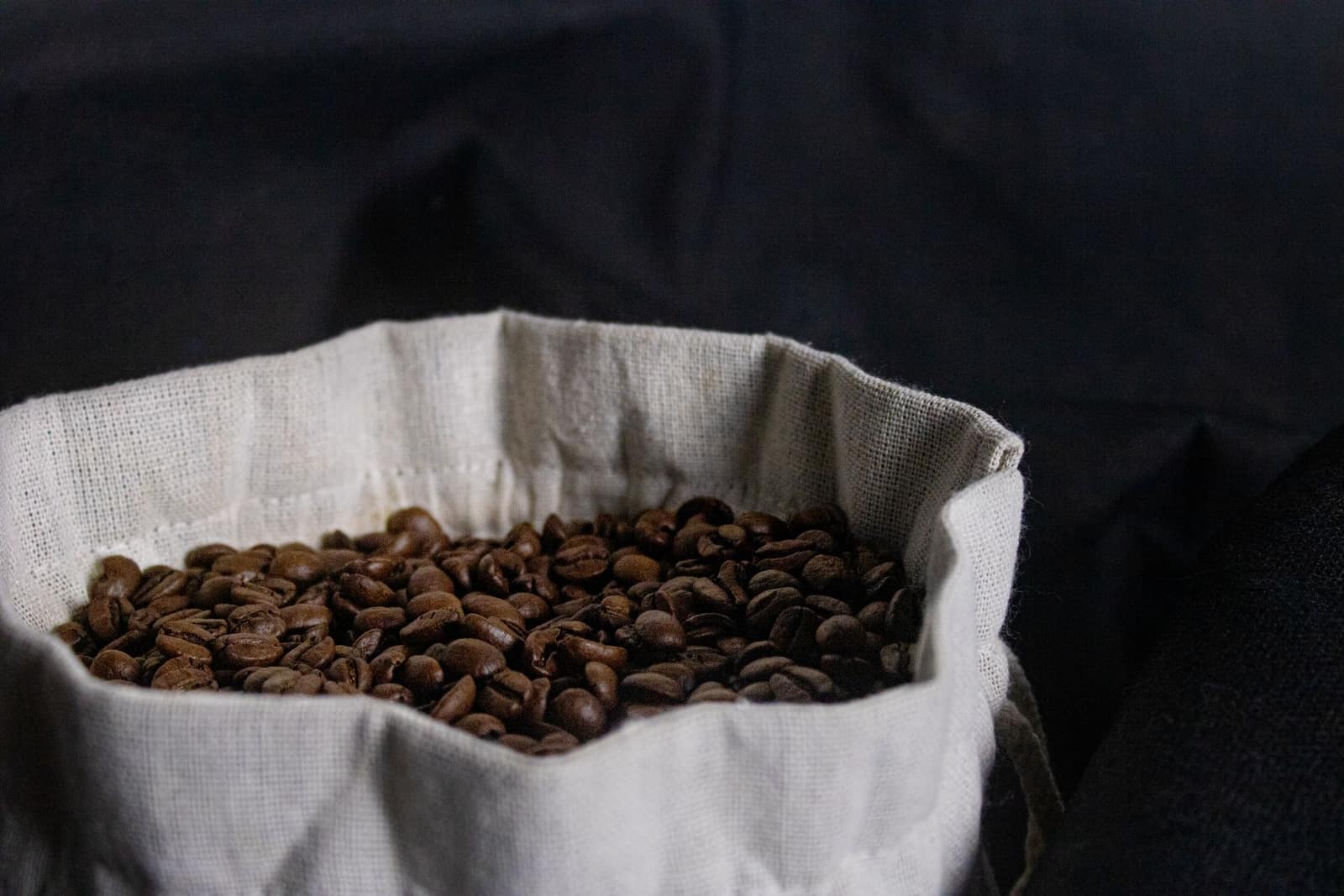 Free to exportProcessed foodCoffeeArabica and Robusta green beans, monsooned and instant coffee. Coffee Board registration and an export permit for every shipment.HS0901.11Exports 2025-26US$ 1.41 bn ↑13%
 Free, with conditionsProcessed foodNatural honeyMustard, multiflora and other honeys, mostly to the USA. A minimum export price of US$ 1,400/tonne applies till 31 Dec 2026.HS0409.00Exports 2025-26US$ 208 mn ↑0.7%
 Free to exportProcessed foodMakhana (fox nut)Popped and flavoured makhana from Bihar for health-snack shelves in the USA, UK and Middle East. Small volumes, strong packaging needs.HS2008.19Exports 2025-26US$ 21.8 mn
 Free to exportProcessed foodJaggery (gur)Cane jaggery blocks and powder, mainly to Africa and Indonesia. Keep it separate from sugar, whose export is controlled.HS1701.13Exports 2025-26US$ 24.4 mn ↓55.9%