

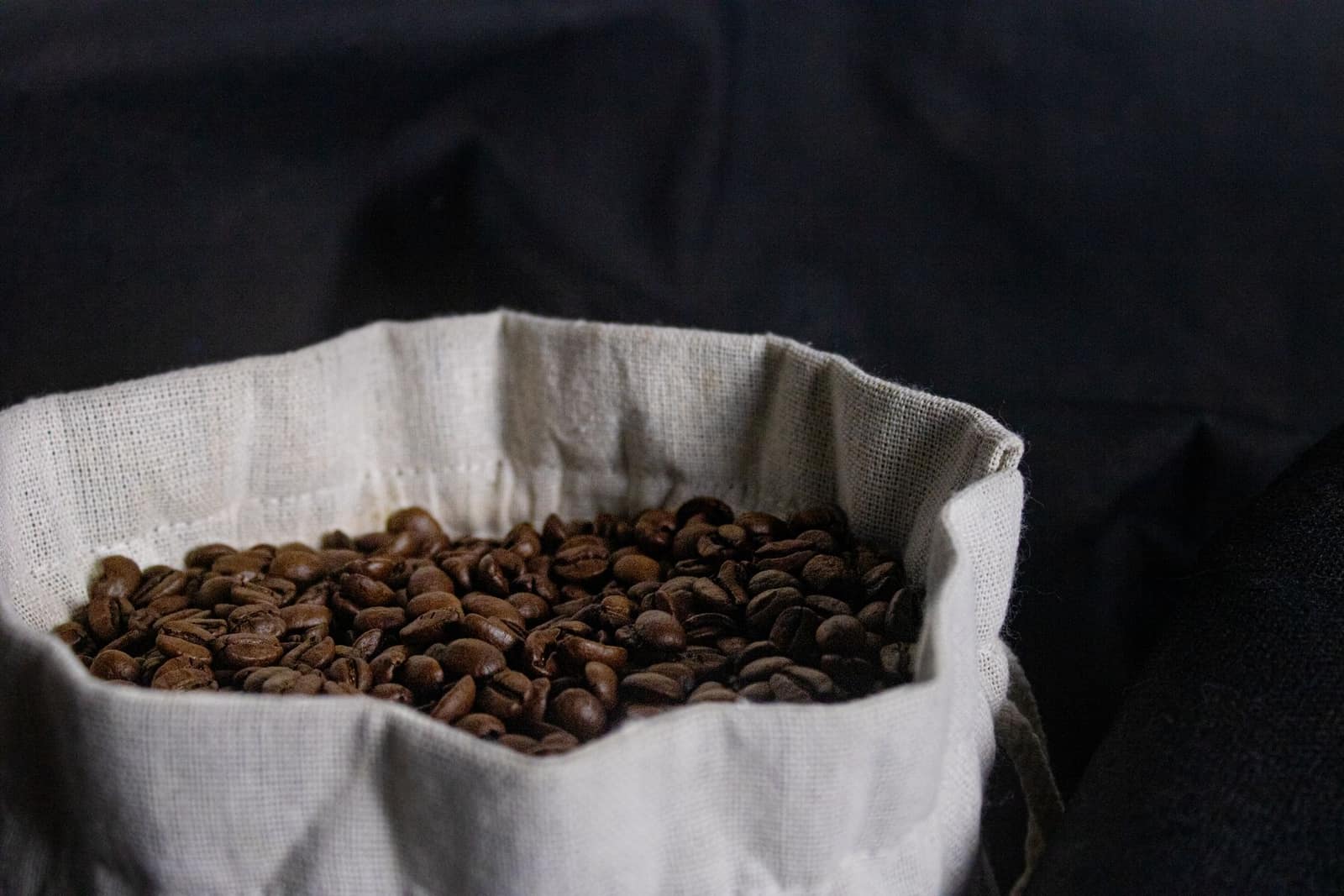
Processed food
Export coffee
Arabica and Robusta green beans, monsooned and instant coffee. Coffee Board registration and an export permit for every shipment.
- HS code
- 0901.11 Coffee, not roasted, not decaffeinated (green coffee). Roasted coffee is 0901.21; instant coffee is 2101.11.
- Export policy
- Free to export Free under ITC(HS), but only a Coffee Board-registered exporter can ship, and each shipment needs an export permit (Form C) and ICO certificate of origin under Rule 44(2) of the Coffee Act, 1942. Post-shipment documents go to the Coffee Board within 45 days.
- Registrations
- 4 IEC, GST and those below
- India’s exports, 2025-26
- US$ 1.41 bn to 73 countries
What is exported
Karnataka, Kerala and Tamil Nadu grow most of India’s coffee, mostly Robusta. Exports go as green beans graded under Coffee Board standards (Plantation A, Robusta Cherry AB, Monsooned Malabar AA and others), and as instant coffee. Coffee Board’s last published country table (2020-21) shows Italy, Germany, Belgium and Russia as the largest buyers.


Varieties, grades and forms
- Arabica Plantation A and ABWashed Arabica graded by bean size.
- Robusta Cherry AB and ParchmentNatural (cherry) and washed (parchment) Robusta — the bulk of exports.
- Monsooned Malabar AABeans exposed to monsoon winds on the west coast; mellow, low acidity; GI.
- Mysore Nuggets Extra BoldLarge-bean premium Arabica.
- Robusta Kaapi Royale and instant coffeePremium Robusta for espresso; instant coffee is a large value-added line (2101 11).
Where it is grown or made
- KarnatakaLargest producer: Kodagu (Coorg), Chikkamagaluru, Bababudangiris, Hassan.
- KeralaWayanad (Robusta) and Travancore.
- Tamil NaduNilgiris, Anamalais and Shevaroys.
- Andhra Pradesh and OdishaAraku Valley — tribal-grown Arabica.
The quality buyers ask for
- Coffee Board grades
- Arabica Plantation (washed) A/B/C, Arabica Cherry AB/PB, Robusta Parchment AB/PB, Robusta Cherry AB/PB/C, plus specialty grades such as Monsooned Malabar AA and Mysore Nuggets EB
- Bean size
- By screen size; PB means peaberry (single round bean)
- Moisture
- Buyers typically want about 10–12.5%, measured by the ISO 6673 method
- Defects
- Black, brown, broken and insect-damaged beans counted against ISO 10470 or the buyer’s defect chart
- Cup quality
- Cup-tested by the buyer; specialty lots are scored on the SCA scale
Certificates
- Coffee Board registrationRequiredOnly a registered exporter can ship coffee.
- Export permit and ICO certificate of originRequiredEach shipment needs a Coffee Board export permit and the ICO certificate of origin.
- FSSAI licenceRequiredCentral licence from FSSAI for the premises where the food is packed or stored for export. Apply on FoSCoS.
- EUDR due diligence (EU)Often askedThe EU Deforestation Regulation covers coffee: EU buyers need plot geolocation and proof of no deforestation. Its start date has been postponed more than once — confirm the current date with your buyer.
- Rainforest Alliance / FairtradeOften askedSustainability certificates asked for by many roasters.
- Organic (NPOP / NOP / EU)Often askedNeeded only if you sell the product as organic: NPOP certification by an accredited body, plus the buyer market’s own organic rules.
Shipping, storage and shelf life
Green coffee in 60 kg jute bags: a 20-ft container typically holds about 300–320 bags (about 18–19 tonnes). Specialty lots use hermetic liners.
Sea freight from New Mangalore, Kochi, Chennai and Tuticorin.
Cool, dry, ventilated store; line containers against condensation, which causes mould and taints.
Green coffee keeps about a year in good storage; roasted coffee only weeks to months.
What goes on the pack and carton
- Bags carry the ICO mark (country code, exporter code and lot number), grade, crop year and net weight.
- Bulk bags and cartons: product and grade, crop year, lot number, net and gross weight, “Product of India”, exporter name and the buyer’s shipping marks, matching the invoice and packing list exactly.
- EU retail packs (Regulation 1169/2011): name of the food, ingredients with allergens highlighted, net quantity, best-before date, storage conditions, the EU importer’s name and address, and origin where required — in the language of the country of sale.
- USA (21 CFR 101): product name, net quantity in both US and metric units, ingredients, allergens, name and place of business of the packer or distributor, Nutrition Facts unless exempt; and “Product of India” marking (19 CFR 134).
The Coffee Board’s quality control division (Bengaluru) assesses quality and cupping; contact it through coffeeboard.gov.in. For residues, ochratoxin A or moisture tests, use an NABL-accredited lab (search nabl-india.org).
Benefits of exporting this product
- RoDTEP refund on this line
Green coffee, not roasted and not decaffeinated (0901 11 11 to 0901 11 90), and decaffeinated (0901 12 00): 1.3% of FOB, no value cap. Rate as listed in Appendix 4R (w.e.f. 10 Oct 2024); DGFT Notification 41/2026-27 keeps the rates in force on 30 Sep 2026 unchanged until 31 Dec 2026. Check your exact 8-digit line on dgft.gov.in before you price.
DGFT — Appendix 4R, RoDTEP schedule for DTA exports w.e.f. 10 Oct 2024 (Notification No. 32, 30 Sep 2024) ↗ - Coffee GIs
India holds GIs for Coorg Arabica, Wayanad Robusta, Chikmagalur Arabica, Araku Valley Arabica, Bababudangiris Arabica and Monsooned Malabar Robusta coffee.
PIB — Brewing Prosperity: India’s coffee story (Nov 2025) ↗ - Zero duty in EFTA and the UK
Under the India–EFTA TEPA (in force from 1 Oct 2025), Switzerland, Norway and Iceland charge zero duty on all coffee from India. The India–UK CETA gives duty-free access for roast-and-ground and instant coffee.
PIB — Brewing Prosperity: India’s coffee story (Nov 2025) ↗ - Coffee Board export promotion
The Coffee Board’s export promotion scheme gives transit/freight assistance for value-added coffee exported in retail packs as “India Brand”, and for high-value green coffee to distant markets such as the USA, Japan, Canada, Australia and South Korea.
PIB — Brewing Prosperity: India’s coffee story (Nov 2025) ↗
Where to register
- Coffee Board of IndiaExporter registration with RCMC (valid 3 years), applied through the National Single Window System, plus an export permit for each shipment.coffeeboard.gov.in ↗
- FSSAIFood business licence. FSSAI rules put food exporters under the Central licence; apply on FoSCoS and keep it valid for the premises you pack from.foscos.fssai.gov.in ↗
Quality and checks
- Grade and cup quality as per Coffee Board grading standards; the permit is issued only for listed types and grades.
- Ochratoxin A and moisture; EU buyers test green coffee for ochratoxin.
- EU Deforestation Regulation (EUDR): EU buyers ask for plot geolocation and due-diligence data for coffee. Confirm the current application date with the buyer.
Register with the Coffee Board, then buy a graded lot from a curing works in Chikkamagaluru, Hassan or Kodagu. Specialty or monsooned coffee in 60 kg bags to a roaster in Europe, or roasted coffee to Gulf cafés, is a realistic first shipment.
Where new exporters go wrong
- Shipping without the export permit, or missing the 45-day post-shipment filing — the Coffee Board can de-register you.
- No farm-level traceability for EU buyers who must meet deforestation due-diligence rules.
Documents this product needs
Schemes that apply
Trade data
Indian coffee exports in numbers
From the Department of Commerce’s TradeStat, country by country. US$, Indian financial years (April–March).
- Exports in 2025-26
- US$ 1.41 bn +24.5% a year on average, 2020-21 to 2025-26
- Change from 2024-25
- ↑ +13% US$ 1.24 bn → US$ 1.41 bn
- Buyer countries
- 73
- Average export price
- US$ 5.71 per kg · 2,46,416 tonnes shipped · US$ 5.08 the year before
The price cycle
India’s average export price per kg each year (total value ÷ total quantity). Highest in 2025-26, lowest in 2020-21 — a 150% swing between them. Keep this swing in mind when you quote.
What next: a projection from the trend
The past trend carried forward — not a forecast by any authority. Sudden changes in policy, prices or demand are not in it.
Likely range US$ 1.83 bn to US$ 2.52 bn.
- Trend
- +23.1% a year
- Fit (R²)
- 0.95
- Based on
- 6 years of official figures
Method: a straight line through the logarithm of yearly exports (log-linear regression); range = ±1 standard error.
Biggest buyer countries
By value in 2025-26. Change is against 2024-25.
Where demand is rising and falling
Only countries that buy at least US$ 1 million or 1% of India’s exports of this product. Change from 2024-25 to 2025-26.
↑ High demand
- CroatiaUS$ 6.3 mn → US$ 20.9 mn↑+233.8%
- RussiaUS$ 17.2 mn → US$ 35 mn↑+103.2%
- AlgeriaUS$ 8.6 mn → US$ 16.5 mn↑+91.4%
- South KoreaUS$ 24.1 mn → US$ 40.8 mn↑+69.4%
- JordanUS$ 43.7 mn → US$ 73.8 mn↑+68.8%
- KuwaitUS$ 32.2 mn → US$ 50 mn↑+55.4%
- EgyptUS$ 28.8 mn → US$ 44.1 mn↑+53.1%
- GreeceUS$ 23.5 mn → US$ 35.1 mn↑+49.6%
↓ Low demand
- PortugalUS$ 19.5 mn → US$ 13 mn↓-33%
- BelgiumUS$ 126 mn → US$ 99.2 mn↓-21.2%
- LibyaUS$ 68.5 mn → US$ 54 mn↓-21.2%
- SpainUS$ 24.8 mn → US$ 21.3 mn↓-14.3%
Which forms sell, and at what price
India’s exports by 8-digit tariff line, 2025-26. Average price = total value ÷ total quantity (TradeStat): the average of every shipment on that line, not the price of any one deal.
| Tariff line | Value 2025-26 | Change | Quantity | Average price |
|---|---|---|---|---|
Coffee rob cherry other grade0901 11 49 · Coffee, not roasted or decaffeinated | US$ 416 mn | ↑+2.5% | 82,281 tonnes | US$ 5.05 per kgwas US$ 4.82 |
Coffee, not roasted or decaffeinated — coffee rob cherry ab0901 11 41 | US$ 353 mn | ↑+4.5% | 71,786 tonnes | US$ 4.92 per kgwas US$ 4.76 |
Coffee arabica plantation other grade0901 11 19 · Coffee, not roasted or decaffeinated | US$ 124 mn | ↑+23.7% | 14,807 tonnes | US$ 8.40 per kgwas US$ 6.34 |
Coffee arabica plantation`a`0901 11 11 · Coffee, not roasted or decaffeinated | US$ 98.7 mn | ↑+8.2% | 12,070 tonnes | US$ 8.17 per kgwas US$ 5.97 |
Coffee, not roasted or decaffeinated — coffee rob parchment ab0901 11 31 | US$ 72.6 mn | ↑+18.8% | 12,236 tonnes | US$ 5.93 per kgwas US$ 5.16 |
Coffee rob parchment other grade0901 11 39 · Coffee, not roasted or decaffeinated | US$ 61 mn | ↑+17.8% | 10,272 tonnes | US$ 5.94 per kgwas US$ 5.10 |
Coffee arabica plantation`b`0901 11 12 · Coffee, not roasted or decaffeinated | US$ 59.8 mn | ↑+58.5% | 7,860 tonnes | US$ 7.61 per kgwas US$ 5.30 |
Coffee arabica cherry other grade0901 11 29 · Coffee, not roasted or decaffeinated | US$ 50.7 mn | ↑+20.7% | 6,078 tonnes | US$ 8.34 per kgwas US$ 6.58 |
Coffee, not roasted or decaffeinated — coffee rob cherry pb0901 11 42 | US$ 36.1 mn | ↑+37.2% | 7,341 tonnes | US$ 4.92 per kgwas US$ 4.79 |
Coffee arabica plantation`c`0901 11 13 · Coffee, not roasted or decaffeinated | US$ 30.7 mn | ↑+25.7% | 4,219 tonnes | US$ 7.28 per kgwas US$ 5.40 |
Coffee, not roasted or decaffeinated — coffee arabica cherry ab0901 11 21 | US$ 24.4 mn | ↑+67% | 3,569 tonnes | US$ 6.84 per kgwas US$ 5.44 |
Coffee, not roasted or decaffeinated — coffee arabica cherry c0901 11 23 | US$ 18.3 mn | ↑+3,347.2% | 2,447 tonnes | US$ 7.47 per kgwas US$ 3.87 |
Coffee other,neither roasted nor decaffe- inated0901 11 90 · Coffee, not roasted or decaffeinated | US$ 17.5 mn | ↑+325.6% | 3,496 tonnes | US$ 4.99 per kgwas US$ 4.60 |
Coffee, not roasted or decaffeinated — coffee rob cherry bulk0901 11 45 | US$ 13.6 mn | ↓-46.7% | 2,634 tonnes | US$ 5.15 per kgwas US$ 4.69 |
The world market
Each country’s own recorded exports and imports in UN Comtrade, 2023 (the latest year nearly every country has reported).
- World imports
- US$ 42.2 bn 2023
- India among exporters
- #17 of 150 countries
- India’s share of world exports
- 1.8% US$ 746 mn
- Left for others to win
- US$ 40.7 bn exported by other countries
Top exporters — your competitors
- 1BrazilUS$ 7.35 bn 17.7%
- 2SwitzerlandUS$ 3.64 bn 8.8%
- 3GermanyUS$ 3.5 bn 8.5%
- 4Viet NamUS$ 3.18 bn 7.7%
- 5ColombiaUS$ 2.91 bn 7%
- 6ItalyUS$ 2.59 bn 6.3%
- 7HondurasUS$ 1.49 bn 3.6%
- 8FranceUS$ 1.28 bn 3.1%
- 9EthiopiaUS$ 1.23 bn 3%
- 10USAUS$ 1.19 bn 2.9%
Biggest buyers in the world
- 1USAUS$ 8.2 bn 19.5%
- 2GermanyUS$ 4.17 bn 9.9%
- 3FranceUS$ 3.34 bn 7.9%
- 4ItalyUS$ 2.48 bn 5.9%
- 5CanadaUS$ 1.74 bn 4.1%
- 6JapanUS$ 1.56 bn 3.7%
- 7NetherlandsUS$ 1.46 bn 3.5%
- 8SpainUS$ 1.39 bn 3.3%
- 9United KingdomUS$ 1.33 bn 3.1%
- 10SwitzerlandUS$ 1.24 bn 3%
Opportunity: what these countries buy from the world, and from India
Each country’s own recorded imports in UN Comtrade, latest year it has reported. The long light part of each bar is demand other countries are filling today.
TradeStat’s 2023-24 quantities are double-counted, so that year is left out of the price. Sources: TradeStat — Export Import Data Bank, Department of Commerce · UN Comtrade database (United Nations Statistics Division) · Figures taken 29 October 2026.
Step by step
How to export coffee
India is a mid-sized coffee origin next to Brazil, Vietnam, Colombia and Indonesia, and exports most of what it grows. Its coffee is shade-grown under forest canopy in Karnataka, Kerala and Tamil Nadu, which buyers value. Italy, Germany, Russia, Belgium and Turkey are big buyers, mostly of Robusta. Openings are specialty Arabica and fine Robusta, Monsooned Malabar (a GI coffee with a unique cup), instant coffee, and traceable, certified lots for buyers facing the EU Deforestation Regulation.
- 01Register with the Coffee Board
Register as an exporter after IEC; you need it before the first shipment.
- 02Source and cure
Buy parchment or cherry from estates and have it hulled, graded and sorted at a curing works.
- 03Approve samples
Send type samples and pre-shipment samples; roasters approve by cupping.
- 04Collect traceability data
For EU buyers, record farm plots and geolocation for every lot.
- 05Permit, ship and certify
Get the export permit and ICO certificate of origin, stuff, and file the shipping bill.
- 06Report to the Board
Submit post-shipment documents to the Coffee Board within 45 days.
- 07Get paid and close the file
Send the original documents through your bank (or to the buyer if paid in advance). Once the money arrives, get the e-BRC and claim RoDTEP and drawback where they apply.
Meet buyers
Trade fairs
- April (2027: 9–11 April)Specialty Coffee Expo / World of Coffee USA (SCA)USA (2027: New Orleans)coffeeexpo.org ↗
- Usually JuneWorld of Coffee (SCA)Europe (city changes)worldofcoffee.org ↗
- Usually late January or FebruaryGulfoodDubaigulfood.com ↗
- October, in odd-numbered years (next: 2027)AnugaCologneanuga.com ↗
- MarchFOODEX JapanTokyojma.or.jp ↗
Questions
Questions about exporting coffee
Arabica or Robusta — which sells better from India?
What is Monsooned Malabar?
Can I export roasted or instant coffee?
What does EUDR mean for me?
How is green coffee priced?
Who buys Indian coffee
All countries → EURRomeItalyManufacturing buyer of Indian leather, yarn, castings, chemicals and seafood. EU rules apply.From India 2025-26US$ 7.79 bn
 EURBerlinGermanyEurope's largest economy and India's biggest EU partner. Values quality, certificates and supply-chain transparency.From India 2025-26US$ 11.5 bn
 RUBMoscowRussiaGrowing buyer of Indian food, medicines and machinery. Payments need care because of sanctions; EAC certification applies.From India 2025-26US$ 4.49 bn
 ECTAAUDCanberraAustraliaZero duty on all Indian goods since Jan 2026 — but some of the world's strictest biosecurity rules.From India 2025-26US$ 7.28 bn
More in processed food
All products → Free to exportProcessed foodTeaAssam, Darjeeling, Nilgiri and CTC tea. You need a Tea Board exporter licence; residues and GI rules matter.HS0902Exports 2025-26US$ 899 mn ↑8%
 Free, with conditionsProcessed foodNatural honeyMustard, multiflora and other honeys, mostly to the USA. A minimum export price of US$ 1,400/tonne applies till 31 Dec 2026.HS0409.00Exports 2025-26US$ 208 mn ↑0.7%
 Free to exportProcessed foodMakhana (fox nut)Popped and flavoured makhana from Bihar for health-snack shelves in the USA, UK and Middle East. Small volumes, strong packaging needs.HS2008.19Exports 2025-26US$ 21.8 mn
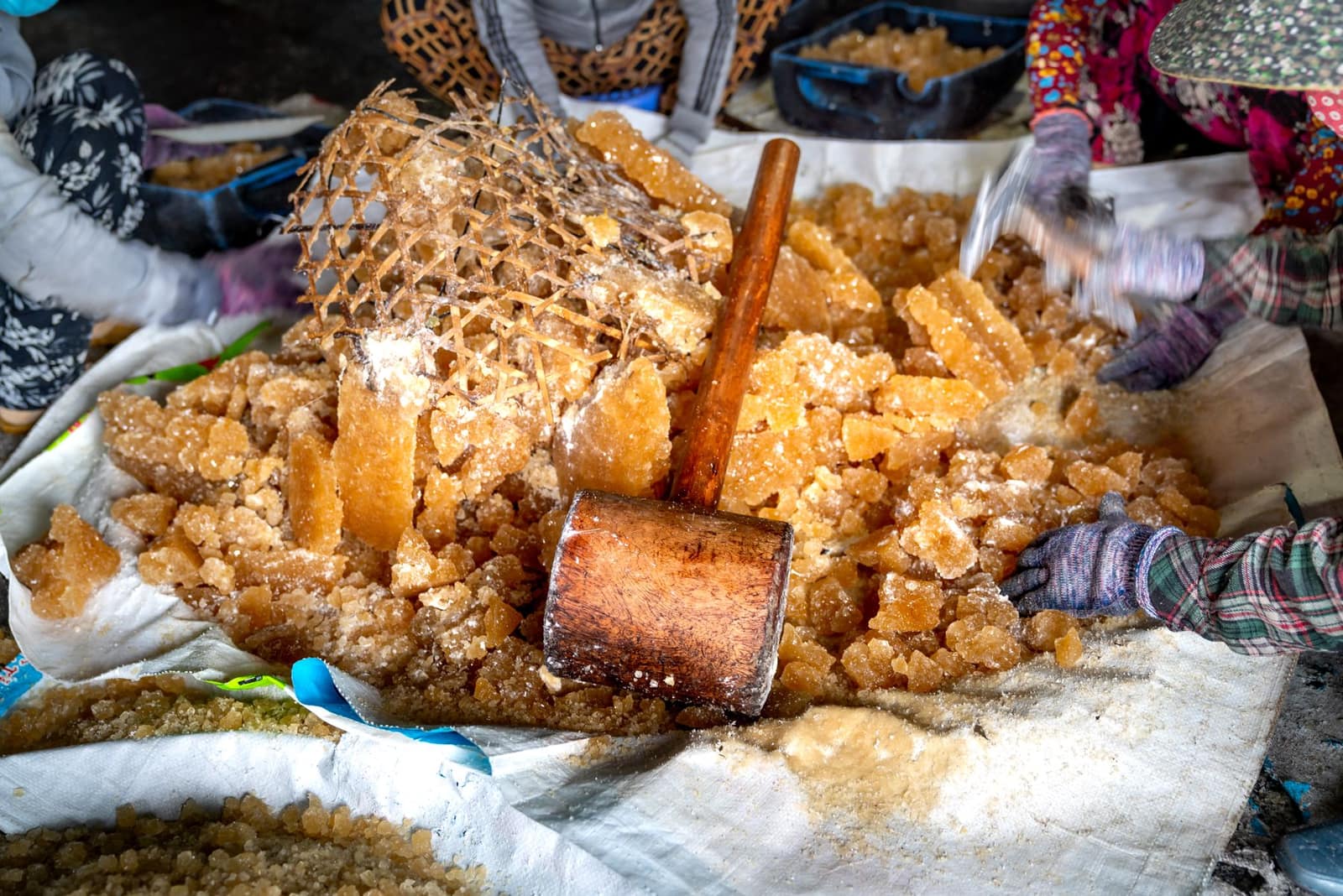 Free to exportProcessed foodJaggery (gur)Cane jaggery blocks and powder, mainly to Africa and Indonesia. Keep it separate from sugar, whose export is controlled.HS1701.13Exports 2025-26US$ 24.4 mn ↓55.9%