

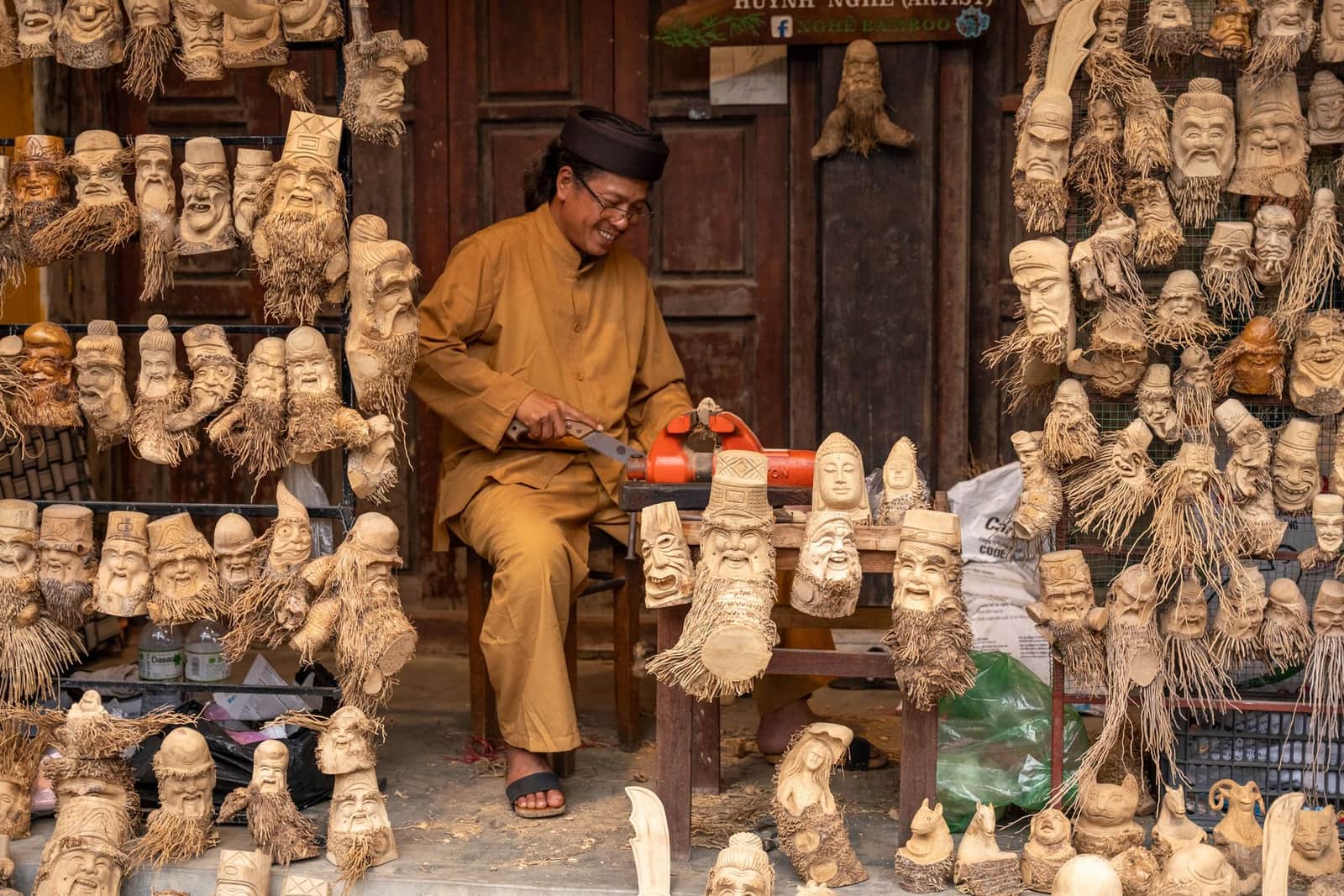
Handicrafts
Export wooden handicrafts
Carved, inlaid and turned wooden décor, boxes and kitchenware from Saharanpur, Jodhpur and Channapatna.
- HS code
- 4420 Wood marquetry and inlaid wood, jewellery boxes, statuettes and other wooden ornaments (HS 4420). Other wooden articles such as kitchenware and hangers are HS 4421; wooden furniture is HS 9403.
- Export policy
- Free, with conditions Finished wooden handicrafts are free to export, but Chapter 44 carries policy conditions: logs, timber and raw sandalwood cannot be exported, and red sanders is restricted. Check the Chapter 44 conditions in Schedule 2 for your wood.
- Registrations
- 4 IEC, GST and those below
- India’s exports, 2025-26
- US$ 11.5 mn to 55 countries
What is exported
India exports carved and inlaid wooden boxes, figurines, trays, kitchenware and lacquered toys made from sheesham, mango wood, acacia and other timbers. Buyers want legal, traceable wood and well-dried pieces. In 2025-26 the USA was the main buyer under both HS 4420 and HS 4421, followed by the UK, Germany, the Netherlands and Canada.
Varieties, grades and forms
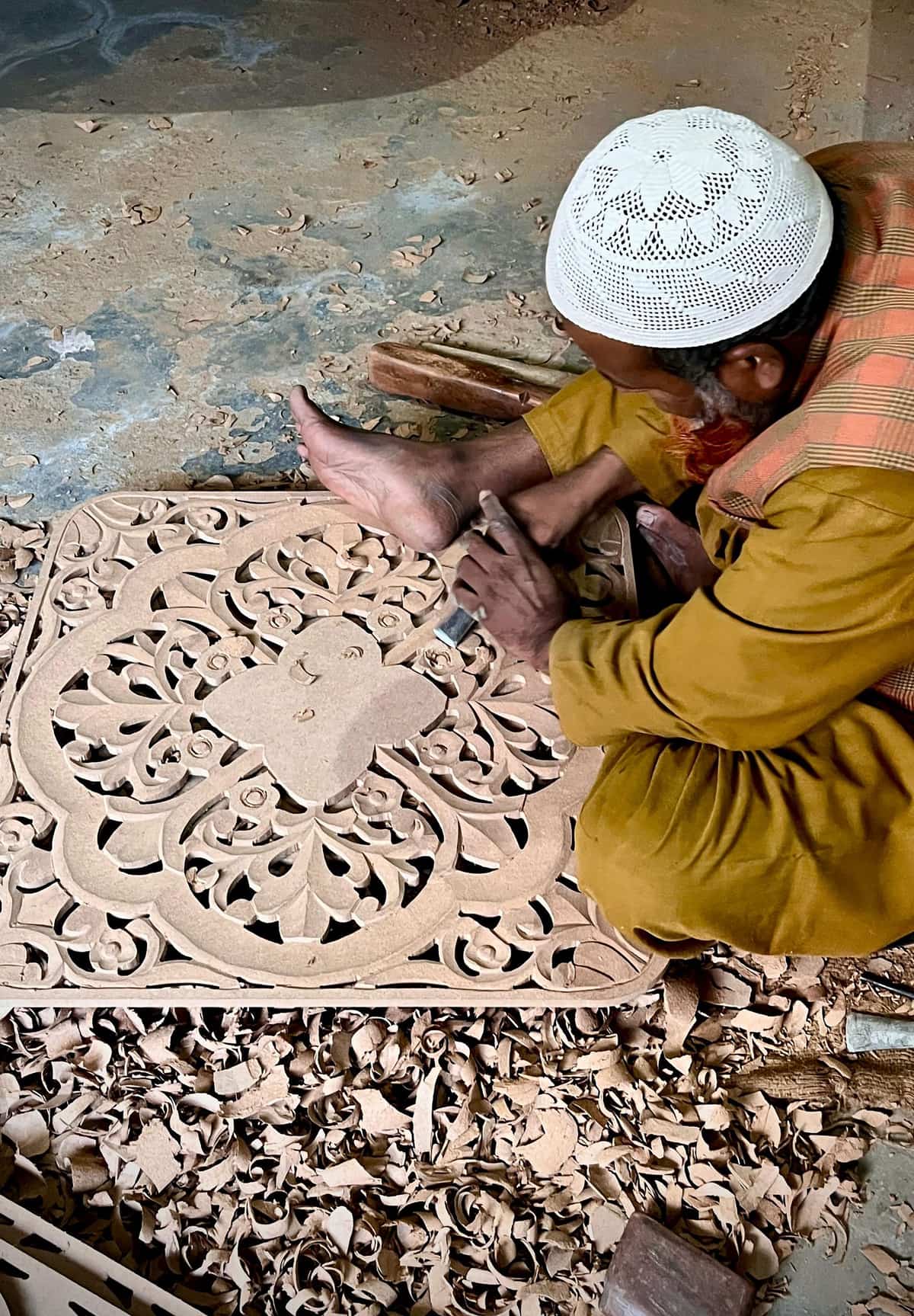
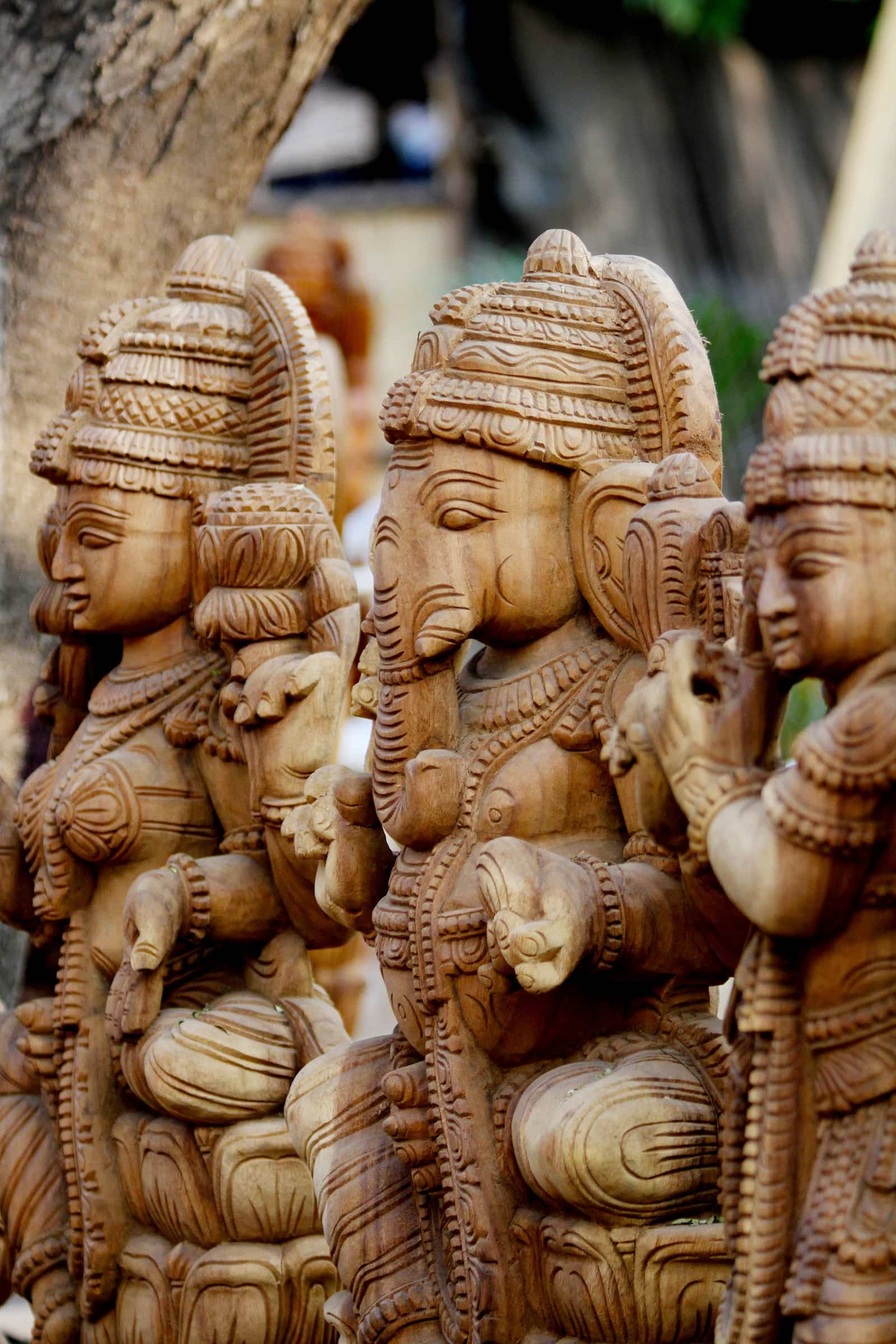
- Carved and inlaid wooden boxes, trays and décorSaharanpur carving and Hoshiarpur inlay; sheesham and mango wood are common.
- Wooden kitchenware and servewareChopping boards, bowls and salad servers in acacia and mango wood; food-safe finish needed.
- Small furniture and accent piecesSide tables, stools and shelves from Jodhpur and Saharanpur.
- Wooden toys and lacquerwareChannapatna, Etikoppaka and Varanasi lacquered toys (see Toys).
- Walnut-wood carvingKashmir walnut-wood boxes and screens — a high-value niche.
Where it is grown or made
- Uttar PradeshSaharanpur (wood carving), Varanasi (wooden lacquerware and toys)
- RajasthanJodhpur — wooden furniture and handicrafts
- PunjabHoshiarpur — wood inlay work
- KarnatakaChannapatna (Ramanagara) and Mysuru — toys and rosewood inlay
- Jammu and KashmirSrinagar — walnut-wood carving
The quality buyers ask for
- Species
- Botanical name declared (e.g. Dalbergia sissoo for sheesham, Mangifera indica for mango wood); needed for customs and legality checks
- Moisture content
- Kiln-dried to the buyer's limit (often around 8–12%) to stop cracking and mould
- Finish
- Food-safe oil or lacquer for kitchenware; lead-free paints (US 16 CFR 1303)
- Formaldehyde (panels)
- Items using MDF or plywood: emission limits such as US TSCA Title VI or EU E1 class
- Furniture strength
- Stability and strength tests (EN or BIFMA/ASTM) for chairs, stools and tables
- Insect treatment
- Heat treatment or fumigation to kill borers before packing
Certificates
- Timber legality proof (VRIKSH or FSC chain-of-custody)RequiredEU and US buyers must show the wood was legally harvested; EPCH's VRIKSH or FSC certificates are the usual proof.
- EUDR due diligence dataOften askedThe EU Deforestation Regulation covers wood products and needs plot geolocation from the supply chain. Its start date has been postponed more than once; confirm the current status on the European Commission page.
- US Lacey Act declarationRequiredThe US importer files a plant-product declaration naming species and country of harvest; you supply the data.
- ISPM-15 / fumigation certificateRequiredWooden packing must be ISPM-15 stamped; many buyers want the goods fumigated too.
- Social compliance audit (amfori BSCI or SMETA)Often askedAsked for by chain stores.
- Food-contact testOften askedFor boards, bowls and utensils sold for food use.
Shipping, storage and shelf life
Usually 40-ft or 40-ft high-cube containers, loaded by volume; flat-pack furniture saves space. Use fumigated, ISPM-15 pallets or none.
Sea freight; mould risk rises on long voyages, so add container desiccants.
Store in a dry shed; never pack wood straight from the workshop floor during monsoon.
What goes on the pack and carton
- 'Made in India' and the wood species on product tags; US retailers often print the species for Lacey Act purposes.
- Care instructions (hand-wash, oil occasionally, not dishwasher safe).
- FSC logo only with a valid chain-of-custody licence code.
- Furniture: assembly instructions and warnings required in the selling market.
The Indian Plywood Industries Research and Training Institute (IPIRTI), Bengaluru, and the Forest Research Institute, Dehradun, test wood and panels. For finishes, food contact and furniture strength, search the NABL directory. Fumigation must be done by an agency approved by the Plant Protection, Quarantine and Storage directorate.
Benefits of exporting this product
- RoDTEP: 1.3% of FOB
Tariff item 4420 19 00 (statuettes and other ornaments of wood (non-tropical)) earns 1.3% of FOB value, with no rupee cap, as a duty credit scrip on ICEGATE. Wood marquetry and inlaid wood (4420 90 10) also gets 1.3%; other articles under 4420 90 90 get 0.5%. These rates continue to 31 Dec 2026 (DGFT Notification 41/2026-27). Confirm your exact 8-digit line on the DGFT RoDTEP page before you price an order.
DGFT — Appendix 4R, RoDTEP schedule for DTA exports w.e.f. 10.10.2024 (Notification 32/2024-25); rates continued to 31.12.2026 by Notification 41/2026-27 ↗ - Duty drawback: 1.9% of FOB
Drawback item 4420 (wooden caskets, statuettes and ornaments) has an All Industry Rate of 1.9% of FOB, paid into your bank account. It is not available on exports under Advance Authorisation or from EOU/SEZ units. Wooden handicraft and art-ware under 442101 also gets 1.9%. Check the current schedule on the CBIC drawback page before shipping.
Gazette of India — Notification 77/2023-Customs (N.T.) dated 20.10.2023: All Industry Rates of duty drawback, in force from 30.10.2023 ↗ - Registered GI tags
Saharanpur Wood Craft, Kashmir Walnut Wood Carving, Channapatna Toys & Dolls and Etikoppaka Toys are registered Geographical Indications. Only registered producers and authorised users may sell under these names, which helps genuine makers stand out and fetch a better price.
IP India (Geographical Indications Registry) — Registration details of Geographical Indications ↗
Where to register
Quality and checks
- USA: Lacey Act — certain wood products need a plant and wood declaration naming the species and country of harvest; illegally sourced wood is banned.
- EU: wood is a commodity under the EU Deforestation Regulation, which applies to large and medium operators from 30 December 2026 and to micro and small ones from 30 June 2027; the EU importer will ask you for plot-level origin data. Check whether your CN code is listed.
- Kiln-dried wood with moisture under the buyer's limit; ISPM-15 treated pallets and crates.
- Australia requires wooden articles to be free of bark and pests and may require treatment — check BICON.
Pick one cluster and one wood with clean paperwork (for example mango wood, which is widely planted). Keep the timber purchase bills and transit passes, join EPCH, and start with small LCL orders of boxes or serving boards before taking furniture-sized orders.
Where new exporters go wrong
- Cracks and mould from wood that was not dried properly — the biggest reason for claims.
- No proof of legal wood origin; EU and US buyers may drop you.
- Using sandalwood or red sanders without checking the export policy — these are controlled.
Documents this product needs
Schemes that apply
- RoDTEP Remission of Duties and Taxes on Exported Products
- Drawback Duty Drawback (All Industry Rates)
- MAI / MAS Market Access Initiative (now Market Access Support under EPM)
- ECGC ECGC export credit insurance for small exporters
- LUT Letter of Undertaking for zero-rated exports under GST
- Districts as Export Hubs Districts as Export Hubs
Sources (9)
- Department of Commerce, Export Import Data Bank — India's exports of HS 4420 and 4421 by country, 2025-26
- DGFT — Appendix 2T: Export Promotion Councils and the products under each
- DGFT — ITC(HS) export policy search (Schedule 2)
- USDA APHIS — Lacey Act plant and wood product declarations
- European Commission — EU Deforestation Regulation (application dates and scope)
- IPPC — ISPM 15: Regulation of wood packaging material in international trade
- Australian Government — BICON import conditions database
- Forest Stewardship Council
- EPCH — official site
Trade data
Indian wooden handicrafts exports in numbers
From the Department of Commerce’s TradeStat, country by country. US$, Indian financial years (April–March).
- Exports in 2025-26
- US$ 11.5 mn -23% a year on average, 2020-21 to 2025-26
- Change from 2024-25
- ↓ -9% US$ 12.7 mn → US$ 11.5 mn
- Buyer countries
- 55
- Average export price
- US$ 7.29 per kg · 1,579 tonnes shipped · US$ 8.01 the year before
The price cycle
India’s average export price per kg each year (total value ÷ total quantity). Highest in 2024-25, lowest in 2021-22 — a 72% swing between them. Keep this swing in mind when you quote.
What next: a projection from the trend
The past trend carried forward — not a forecast by any authority. Sudden changes in policy, prices or demand are not in it.
Likely range US$ 3.3 mn to US$ 7.9 mn.
- Trend
- -27.2% a year
- Fit (R²)
- 0.84
- Based on
- 6 years of official figures
Method: a straight line through the logarithm of yearly exports (log-linear regression); range = ±1 standard error.
Biggest buyer countries
By value in 2025-26. Change is against 2024-25.
Where demand is rising and falling
Only countries that buy at least US$ 1 million or 1% of India’s exports of this product. Change from 2024-25 to 2025-26.
↑ High demand
No sizeable country falls in this list this year.
↓ Low demand
No sizeable country falls in this list this year.
Which forms sell, and at what price
India’s exports by 8-digit tariff line, 2025-26. Average price = total value ÷ total quantity (TradeStat): the average of every shipment on that line, not the price of any one deal.
| Tariff line | Value 2025-26 | Change | Quantity | Average price |
|---|---|---|---|---|
Others-of-wood marquetry and inlaid wood;casketsandcasesfor cultry and other similar articles of wood4420 90 90 · Wood, marquetry and inlaid wood, caskets and cases for jewellery or cutlery and similar articles of wood… | US$ 7 mn | ↑+0.7% | 790 tonnes | US$ 8.89 per kgwas US$ 8.19 |
Other(statuettes and other ornaments:)4420 19 00 · Wood, statuettes and other ornaments, of other than tropical wood | US$ 2.6 mn | ↓-13.7% | 318 tonnes | US$ 8.14 per kgwas US$ 9.01 |
Wood marquetry and inlaid wood4420 90 10 · Wood, marquetry and inlaid wood, caskets and cases for jewellery or cutlery and similar articles of wood… | US$ 1.8 mn | ↓-30.9% | 455 tonnes | US$ 3.89 per kgwas US$ 6.62 |
Of tropical wood(statuettes and other ornaments:)4420 11 00 · Wood, statuettes and other ornaments, of tropical wood | US$ 130k | ↑+8.3% | 16 tonnes | US$ 8.16 per kgwas US$ 12.90 |
The world market
Each country’s own recorded exports and imports in UN Comtrade, 2023 (the latest year nearly every country has reported).
- World imports
- US$ 2.02 bn 2023
- India among exporters
- #16 of 150 countries
- India’s share of world exports
- 0.7% US$ 15.7 mn
- Left for others to win
- US$ 2.1 bn exported by other countries
Top exporters — your competitors
- 1ChinaUS$ 1.25 bn 58.9%
- 2GermanyUS$ 88.3 mn 4.2%
- 3NetherlandsUS$ 75.2 mn 3.6%
- 4FranceUS$ 69.3 mn 3.3%
- 5IndonesiaUS$ 62.9 mn 3%
- 6PolandUS$ 54.3 mn 2.6%
- 7ItalyUS$ 46 mn 2.2%
- 8Viet NamUS$ 36.1 mn 1.7%
- 9USAUS$ 36 mn 1.7%
- 10China, Hong Kong SARUS$ 34.4 mn 1.6%
Biggest buyers in the world
- 1USAUS$ 677 mn 33.5%
- 2GermanyUS$ 169 mn 8.3%
- 3FranceUS$ 140 mn 6.9%
- 4JapanUS$ 98.4 mn 4.9%
- 5NetherlandsUS$ 83.7 mn 4.1%
- 6SwitzerlandUS$ 82.3 mn 4.1%
- 7United KingdomUS$ 79.2 mn 3.9%
- 8CanadaUS$ 56.8 mn 2.8%
- 9ItalyUS$ 39.3 mn 1.9%
- 10SpainUS$ 37 mn 1.8%
Opportunity: what these countries buy from the world, and from India
Each country’s own recorded imports in UN Comtrade, latest year it has reported. The long light part of each bar is demand other countries are filling today.
TradeStat’s 2023-24 quantities are double-counted, so that year is left out of the price. Sources: TradeStat — Export Import Data Bank, Department of Commerce · UN Comtrade database (United Nations Statistics Division) · Figures taken 29 October 2026.
Step by step
How to export wooden handicrafts
India exports wooden handicrafts, small furniture, kitchenware and toys from clusters such as Saharanpur, Jodhpur, Channapatna and Kashmir. Its main competitors are China, Vietnam and Indonesia, which have large factory-scale wood industries. Demand comes from décor, kitchenware and furniture retailers in the USA and Europe, and is increasingly shaped by timber legality rules. Openings are in sheesham, mango and acacia wood kitchenware and décor with clear legality papers, and in natural-finish products for sustainability-minded buyers.
- 01Secure legal timber
Buy from sources that give transit permits and bills; keep them for legality audits.
- 02Season and kiln-dry
Dry timber to the buyer's moisture limit before making.
- 03Sample and test
Make samples, test finish (and food contact or strength where relevant).
- 04Produce and finish
Carve, assemble, sand and finish; check moisture again before packing.
- 05Treat and pack
Heat-treat or fumigate, pack with desiccants and ISPM-15 material.
- 06Documents
Prepare species and origin data for the Lacey Act or EUDR, plus the fumigation certificate.
- 07Ship and collect
File the shipping bill, claim RoDTEP and drawback, and collect payment.
Meet buyers
Trade fairs
- Twice a year: spring (next: 15–19 March 2027) and autumn (October)IHGF Delhi Fair (EPCH)Greater Noida, Indiaihgfdelhifair.in ↗
- February, every year — check datesAmbienteFrankfurt, Germanyambiente.messefrankfurt.com ↗
- January and September — check datesMaison&ObjetParis, Francemaison-objet.com ↗
- Late January to early February (next: 29 January–2 February 2027)ChristmasworldFrankfurt, Germanychristmasworld.messefrankfurt.com ↗
Questions
Questions about exporting wooden handicrafts
Is sheesham allowed for export?
What does the Lacey Act ask for?
Why did my goods arrive mouldy?
Do mango-wood cutting boards need testing?
What is EUDR and does it apply to me?
Sources (7)
- EPCH (Export Promotion Council for Handicrafts) — official site
- European Commission — Regulation on deforestation-free products (EUDR)
- USDA APHIS — Lacey Act plant declaration
- IPPC — ISPM 15, Regulation of wood packaging material in international trade
- eCFR — 16 CFR Part 1303, Ban of lead-containing paint and certain consumer products bearing it
- European Commission — Food contact materials
- NABL — search for accredited testing laboratories
Who buys Indian wooden handicrafts
All countries → USDWashington, D.C.United States of AmericaIndia's largest single-country export market. Strict FDA rules for food; extra 10% US duty on most goods since July 2026.From India 2025-26US$ 87.3 bn
 CETAGBPLondonUnited KingdomNew CETA in force since July 2026 — most Indian goods now enter duty-free. Strong market for garments, food and engineering.From India 2025-26US$ 13.4 bn
 EURBerlinGermanyEurope's largest economy and India's biggest EU partner. Values quality, certificates and supply-chain transparency.From India 2025-26US$ 11.5 bn
 EURAmsterdamNetherlandsEurope's main gateway: Rotterdam handles goods for the whole EU. EU food-safety and residue rules apply.From India 2025-26US$ 17.5 bn
 CADOttawaCanadaLarge Indian diaspora market. Importer needs a CFIA licence for food; labels in English and French.From India 2025-26US$ 4.67 bn
 SARRiyadhSaudi ArabiaLarge Gulf market for rice, food and engineering goods. Strict SFDA food rules and SABER certification for regulated goods.From India 2025-26US$ 10.3 bn
 EURParisFranceFashion, food and design market. EU rules plus French-language labels; SIAL Paris is a key food fair.From India 2025-26US$ 7.1 bn
More in handicrafts
All products → Free to exportHandicraftsHandicrafts (cane, bamboo, jute and natural fibre)Baskets, storage, lamps and décor from cane, bamboo and grasses, sold to home-décor importers.HS4602Exports 2025-26US$ 23.3 mn ↓20.7%
 Free to exportHandicraftsBrass and art metalwareMoradabad-style brass décor, lamps, bells and tableware for gift and home-décor buyers.HS8306Exports 2025-26US$ 36.4 mn ↑11.4%
 Free to exportHandicraftsIncense sticks (agarbatti) and dhoopMasala and dipped incense sticks, cones and dhoop for the USA, the Gulf, Africa and Latin America.HS3307.41Exports 2025-26US$ 151 mn ↓0.4%
 Free to exportHandicraftsGlasswareTumblers, tableware and decorative glass from Firozabad and other centres; UAE and USA lead.HS7013Exports 2025-26US$ 55.9 mn ↑47.1%