

Textiles & apparel
Export carpets and rugs
Hand-knotted, tufted and flat-woven rugs from Bhadohi, Jaipur and Panipat; the USA buys over half.
- HS code
- 5701 Hand-knotted carpets (HS 5701). Woven and flat-weave rugs and durries are in 5702, tufted carpets in 5703, and other floor coverings in 5705.
- Export policy
- Free to export Free to export. Carpets (Chapter 57) are under RoDTEP, not RoSCTL.
- Registrations
- 4 IEC, GST and those below
- India’s exports, 2025-26
- US$ 1.97 bn to 144 countries
What is exported
India sells hand-knotted, hand-tufted and flat-woven wool, cotton, jute and silk rugs, mostly to importers and home-furnishing retailers. Designs are often the buyer's own. In 2025-26 India exported about US$ 2.0 billion of Chapter 57 carpets; the USA took more than half, followed by the UK, Germany, Australia and the UAE.


Varieties, grades and forms
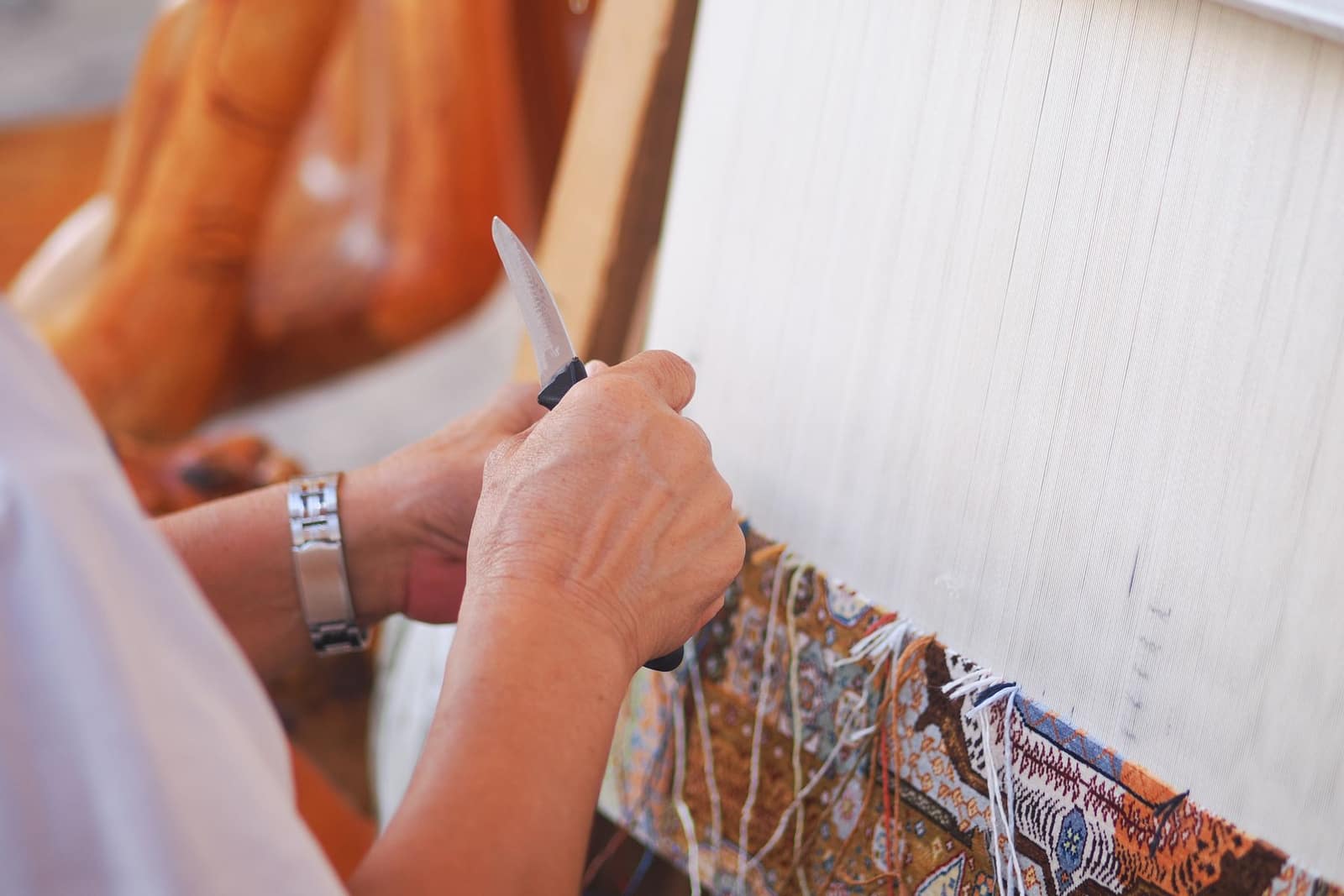
- Hand-knotted carpets (wool and silk)The premium line, priced by knots per square inch; Bhadohi, Jaipur and Kashmir make them.
- Hand-tufted carpetsMade with a tufting gun on a cotton backing; faster and cheaper, the biggest volume from Bhadohi–Mirzapur.
- Flat-woven durries and kilimsCotton, wool or jute; Panipat, Agra and Jaipur are strong.
- Handloom and shaggy rugsWoven pile rugs, often with recycled yarn, mainly from Panipat.
- Jute and natural-fibre rugsBraided and woven jute rugs, popular in the USA and Europe.
Where it is grown or made
- Uttar PradeshBhadohi, Mirzapur and Varanasi — the carpet belt; Agra (durries)
- HaryanaPanipat — durries, handloom and tufted rugs
- RajasthanJaipur — hand-knotted and flat-woven rugs
- Jammu and KashmirSrinagar — hand-knotted silk and wool carpets
- Madhya PradeshGwalior — handmade carpets
The quality buyers ask for
- Construction
- Hand-knotted, hand-tufted, hand-loomed or flat-woven (dhurrie, kilim)
- Knot density
- Knots per square inch (or per square metre) for hand-knotted rugs; buyers quote it with the knot type
- Pile and weight
- Pile height in mm, pile weight and total weight per square metre
- Fibre
- Wool type (New Zealand or Indian blends), silk, viscose, jute, cotton or recycled PET, declared by percentage
- Colour fastness
- To light (ISO 105-B02), rubbing (ISO 105-X12) and water
- Size tolerance
- Finished size within the tolerance the buyer sets, usually a small percentage of length and width
- Flammability (USA)
- Large carpets and rugs must pass the surface flammability (pill) test of 16 CFR Part 1630; small rugs fall under Part 1631
Certificates
- Child-labour-free certification (GoodWeave, Care & Fair or Kaleen label)RequiredMost US and European importers want proof that the rug was made without child labour.
- Social compliance audit (amfori BSCI or SMETA)Often askedFactory and supply-chain audit asked for by large retailers.
- US flammability test report (16 CFR 1630/1631)RequiredLegally required for rugs sold in the USA; keep a test report per construction.
- GI — Bhadohi hand-made carpetOften askedBhadohi carpets are GI-registered; registered users can use the name.
- OEKO-TEX STANDARD 100 / GRSOften askedHarmful-substance test, or recycled-content certification for PET rugs.
Shipping, storage and shelf life
Rugs are rolled, wrapped in polythene and hessian, and shipped in 20-ft or 40-ft containers; mixed sizes are planned by volume. LCL is common for first orders.
Sea freight from Mumbai/Nhava Sheva or through ICDs near Bhadohi and Panipat; air for urgent custom pieces.
Keep wool rugs dry and protected from moths; use moth-proofing only with chemicals allowed in the buyer's market.
What goes on the pack and carton
- Fibre content, size and country of origin ('Made in India' or 'Hand-knotted in India') on a sewn-in label.
- USA: small rugs that fail the 1631 test must carry a flammability warning label as the rule prescribes.
- Child-labour-free label with its serial number, if certified; the buyer's SKU and care tag.
The Indian Institute of Carpet Technology (IICT), Bhadohi, tests carpets and yarn. For US flammability and colour-fastness reports, use an NABL-accredited lab (search 'textiles' on the NABL directory) or the lab the buyer names. CEPC can guide members to testing facilities.
Benefits of exporting this product
- RoDTEP: 2.5% of FOB
Tariff item 5701 10 10 (hand-made knotted carpets of wool or fine animal hair) earns 2.5% of FOB value, capped at ₹28.4 per square metre, as a duty credit scrip on ICEGATE. Hand-made knotted carpets of other textiles (5701 90 11) get 3.4%, capped at ₹17.2 per square metre. These rates continue to 31 Dec 2026 (DGFT Notification 41/2026-27). Confirm your exact 8-digit line on the DGFT RoDTEP page before you price an order.
DGFT — Appendix 4R, RoDTEP schedule for DTA exports w.e.f. 10.10.2024 (Notification 32/2024-25); rates continued to 31.12.2026 by Notification 41/2026-27 ↗ - Duty drawback: 3.8% of FOB
Drawback item 570101 (knotted carpets of wool or fine animal hair) has an All Industry Rate of 3.8% of FOB, capped at ₹433 per square metre, paid into your bank account. It is not available on exports under Advance Authorisation or from EOU/SEZ units. Knotted silk carpets (570103) get 11%, capped at ₹5,826 per square metre. Check the current schedule on the CBIC drawback page before shipping.
Gazette of India — Notification 77/2023-Customs (N.T.) dated 20.10.2023: All Industry Rates of duty drawback, in force from 30.10.2023 ↗ - Registered GI tags
Hand Made Carpet of Bhadohi, Kashmiri Hand Knotted Carpet, Gwalior Handmade Carpet, Mirzapur Handmade Dari and Agra Durrie are registered Geographical Indications. Only registered producers and authorised users may sell under these names, which helps genuine makers stand out and fetch a better price.
IP India (Geographical Indications Registry) — Registration details of Geographical Indications ↗ - Zero duty into the UK (CETA)
The India-UK CETA came into force on 15 July 2026 and gives zero-duty access to nearly 99% of India's exports; the Commerce Ministry named textiles among the sectors that gain. Claim it with a CETA certificate of origin and check the line for your code on the UK Trade Tariff.
PIB — India-UK CETA enters into force (15 Jul 2026): zero-duty access for nearly 99% of India's exports ↗
Where to register
- CEPC (Carpet Export Promotion Council)RCMC for handmade carpets, rugs, durries and other handmade floor coverings.cepc.co.in ↗
- HEPC / Indian Silk EPC (if handloom or silk)Handloom floor coverings can register with HEPC and silk carpets with the Indian Silk EPC, as per Appendix 2T.content.dgft.gov.in ↗
Quality and checks
- USA: carpets and rugs must meet the federal flammability standards enforced by the Consumer Product Safety Commission.
- Fibre-content and origin labels (FTC rules in the USA, EU rules in Europe).
- Child-labour-free and fair-labour proof: many importers ask for an independent certification of the supply chain.
- Moth-proofing and fumigation, if the buyer or destination requires it, for wool and natural-fibre rugs.
Most new exporters begin by sourcing from established weavers in Bhadohi–Mirzapur, Jaipur or Panipat. Join CEPC, display at the India Carpet Expo or an overseas fair under CEPC, and take sample and small mixed orders from rug stores before bidding for retailer programmes.
Where new exporters go wrong
- Size and colour tolerance disputes on hand-made pieces — write tolerances into the order.
- Heavy dependence on the US market; check current US duty rates before quoting a landed price.
- Moisture in transit causes mould and smell. Dry the rugs fully and use moisture absorbers in the container.
Documents this product needs
Schemes that apply
- RoDTEP Remission of Duties and Taxes on Exported Products
- Drawback Duty Drawback (All Industry Rates)
- Advance Authorisation Advance Authorisation
- MAI / MAS Market Access Initiative (now Market Access Support under EPM)
- ECGC ECGC export credit insurance for small exporters
- LUT Letter of Undertaking for zero-rated exports under GST
- Districts as Export Hubs Districts as Export Hubs
Sources (7)
- Department of Commerce, Export Import Data Bank — India's exports of HS 57 (and 5701, 5702, 5703) by country, 2025-26
- DGFT — Appendix 2T: Export Promotion Councils and the products under each
- DGFT — ITC(HS) export policy search (Schedule 2)
- US Consumer Product Safety Commission — business guidance
- US FTC — Labeling requirements under the Textile and Wool Acts
- US International Trade Commission — Harmonized Tariff Schedule (current US duty rates)
- Carpet Export Promotion Council — official site
Trade data
Indian carpets and rugs exports in numbers
From the Department of Commerce’s TradeStat, country by country. US$, Indian financial years (April–March).
- Exports in 2025-26
- US$ 1.97 bn +1.1% a year on average, 2020-21 to 2025-26
- Change from 2024-25
- ↓ -5.9% US$ 2.09 bn → US$ 1.97 bn
- Buyer countries
- 144
- Average export price
- US$ 10.06 per kg · 1,95,886 tonnes shipped · US$ 10.56 the year before
The price cycle
India’s average export price per kg each year (total value ÷ total quantity). Highest in 2022-23, lowest in 2020-21 — a 15% swing between them. Keep this swing in mind when you quote.
What next: a projection from the trend
The past trend carried forward — not a forecast by any authority. Sudden changes in policy, prices or demand are not in it.
Likely range US$ 1.75 bn to US$ 2.28 bn.
- Trend
- +0.3% a year
- Fit (R²)
- 0.01 — weak, read with care
- Based on
- 6 years of official figures
Method: a straight line through the logarithm of yearly exports (log-linear regression); range = ±1 standard error.
Biggest buyer countries
By value in 2025-26. Change is against 2024-25.
Where demand is rising and falling
Only countries that buy at least US$ 1 million or 1% of India’s exports of this product. Change from 2024-25 to 2025-26.
↑ High demand
- United Arab EmiratesUS$ 46.6 mn → US$ 60.4 mn↑+29.5%
- SwedenUS$ 43.8 mn → US$ 52 mn↑+18.9%
- SpainUS$ 29.6 mn → US$ 34.5 mn↑+16.6%
- United KingdomUS$ 102 mn → US$ 114 mn↑+11%
↓ Low demand
- GermanyUS$ 116 mn → US$ 86.4 mn↓-25.8%
- United States of AmericaUS$ 1.23 bn → US$ 1.1 bn↓-10.8%
Which forms sell, and at what price
India’s exports by 8-digit tariff line, 2025-26. Average price = total value ÷ total quantity (TradeStat): the average of every shipment on that line, not the price of any one deal.
| Tariff line | Value 2025-26 | Change | Quantity | Average price |
|---|---|---|---|---|
Carpets and other textile floor coverings, tufted, of wool or fine animal hair, whether or not made up — carpets5703 10 10 | US$ 212 mn | ↑+2.1% | 14.4 mn m² | US$ 14.70 per m²was US$ 15.92 |
Carpets and other textile floor coverings, knotted, of wool or fine animal hair, whether or not made up — hand-made5701 10 10 | US$ 189 mn | ↓-13.4% | 2.8 mn m² | US$ 66.44 per m²was US$ 74.34 |
Carpets, carpeting and rugs5703 39 10 · Carpets, tufted, of man-made textile materials, whether of not made up | US$ 161 mn | ↓-1.2% | 20.6 mn m² | US$ 7.82 per m²was US$ 7.91 |
Carpets and other textile floor coverings, woven,, of wool or fine animal hair, of pile construction, not… — carpets5702 31 10 | US$ 151 mn | ↓-8.6% | 7.9 mn m² | US$ 19.16 per m²was US$ 19.90 |
Carpets and other floor coverings, of cotton, other than durries5703 90 10 · Carpets and other textile floor coverings, tufted, of textile materials, whether or not made up | US$ 127 mn | ↓-10.5% | 16.5 mn m² | US$ 7.68 per m²was US$ 7.82 |
Others-of-of other textile materials:5703 90 90 · Carpets and other textile floor coverings, tufted, of textile materials, whether or not made up | US$ 111 mn | ↓-6.7% | 15.6 mn m² | US$ 7.11 per m²was US$ 7.18 |
Carpets,carpeting and rugs5702 32 10 · Carpets and other textile floor coverings, woven,, of man-made textile materials, of pile construction, not… | US$ 101 mn | ↑+0.2% | 7.4 mn m² | US$ 13.74 per m²was US$ 16.10 |
Carpets and other textile floor coverings in chapter 57, whether or not made up — other carpets of jute5705 00 39 | US$ 70.8 mn | ↓-19.4% | 9.0 mn m² | US$ 7.88 per m²was US$ 7.66 |
Others-of-others-of-carpets and other textile floor coverings(includinguding turf), tufted, whether or not made up5703 39 90 · Carpets, tufted, of man-made textile materials, whether of not made up | US$ 67.7 mn | ↓-2.5% | 9.1 mn m² | US$ 7.46 per m²was US$ 8.30 |
Carpets etc. of cotton (not durries)5702 99 10 · Carpets and other textile floor coverings, woven,, of textile materials, made up in item no. 5702.10 or… | US$ 50.3 mn | ↑+6.2% | 9.6 mn m² | US$ 5.22 per m²was US$ 4.87 |
Carpeting, flr rug asnd the like5702 31 40 · Carpets and other textile floor coverings, woven,, of wool or fine animal hair, of pile construction, not… | US$ 49.3 mn | ↑+29.3% | 3.0 mn m² | US$ 16.31 per m²was US$ 15.28 |
Carpets,carpeting and rugs5702 42 10 · Carpets and other textile floor coverings, woven,, of man-made textile materials, of pile construction… | US$ 41.8 mn | ↑+7.1% | 7.5 mn m² | US$ 5.59 per m²was US$ 7.87 |
Other flr cvrngs of other txtl, not pile constrtn5702 99 90 · Carpets and other textile floor coverings, woven,, of textile materials, made up in item no. 5702.10 or… | US$ 41.1 mn | ↓-10.2% | 4.7 mn m² | US$ 8.76 per m²was US$ 9.38 |
Carpets and other textile floor coverings in chapter 57, whether or not made up — durries of wool5705 00 23 | US$ 40.6 mn | ↓-5.2% | 2.8 mn m² | US$ 14.32 per m²was US$ 14.11 |
The world market
Each country’s own recorded exports and imports in UN Comtrade, 2023 (the latest year nearly every country has reported).
- World imports
- US$ 13.5 bn 2023
- India among exporters
- #3 of 149 countries
- India’s share of world exports
- 11% US$ 1.81 bn
- Left for others to win
- US$ 14.6 bn exported by other countries
Top exporters — your competitors
- 1ChinaUS$ 3.98 bn 24.2%
- 2TürkiyeUS$ 2.81 bn 17.1%
- 3IndiaUS$ 1.81 bn 11%
- 4NetherlandsUS$ 1.16 bn 7%
- 5BelgiumUS$ 1.07 bn 6.5%
- 6USAUS$ 725 mn 4.4%
- 7GermanyUS$ 570 mn 3.5%
- 8Viet NamUS$ 377 mn 2.3%
- 9EgyptUS$ 358 mn 2.2%
- 10PolandUS$ 308 mn 1.9%
Biggest buyers in the world
- 1USAUS$ 3.37 bn 24.9%
- 2United KingdomUS$ 1.06 bn 7.8%
- 3GermanyUS$ 999 mn 7.4%
- 4CanadaUS$ 641 mn 4.7%
- 5JapanUS$ 536 mn 4%
- 6FranceUS$ 535 mn 4%
- 7Saudi ArabiaUS$ 478 mn 3.5%
- 8NetherlandsUS$ 441 mn 3.3%
- 9AustraliaUS$ 377 mn 2.8%
- 10PolandUS$ 284 mn 2.1%
Opportunity: what these countries buy from the world, and from India
Each country’s own recorded imports in UN Comtrade, latest year it has reported. The long light part of each bar is demand other countries are filling today.
TradeStat’s 2023-24 quantities are double-counted, so that year is left out of the price. Sources: TradeStat — Export Import Data Bank, Department of Commerce · UN Comtrade database (United Nations Statistics Division) · Figures taken 29 October 2026.
Step by step
How to export carpets and rugs
India is one of the world's largest exporters of hand-made carpets, and most of its output is sold abroad. The main hand-made competitors are Iran, Nepal, Pakistan, Afghanistan and Turkey, while machine-made rugs from Turkey, Belgium and China compete on price. Demand is driven by home décor spending in the USA and Europe, where buyers want natural fibres, hand-knotted and hand-tufted work, and proof that no child labour was used. Openings are in contemporary designs, recycled and natural-fibre flat weaves, and short-run custom rugs for designers.
- 01Design and colour card
Get the design, size and colour pom-poms approved; make a strike-off sample.
- 02Yarn and dyeing
Buy wool, dye in lots and keep dye-lot records to avoid shade differences.
- 03Weaving with registered weavers
Give looms only to registered, adult weavers and keep loom records for child-labour audits.
- 04Washing and finishing
Wash, clip, stretch and bind the rug; measure the finished size.
- 05Testing and inspection
Run flammability and colour-fastness tests; allow the buyer's inspection.
- 06Packing and shipment
Roll, label and pack; file the shipping bill under Chapter 57 and claim RoSCTL or RoDTEP and drawback as applicable.
- 07Payment
Collect against documents or LC; for open account, insure with ECGC.
Meet buyers
Trade fairs
- January (next listed edition: 17–20 January 2028)DOMOTEXHannover, Germanydomotex.de ↗
- Usually twice a year — check dates on CEPCIndia Carpet Expo (CEPC)Varanasi / New Delhi, Indiacepc.co.in ↗
- January (next: 12–15 January 2027) — check datesHeimtextilFrankfurt, Germanyheimtextil.messefrankfurt.com ↗
- January and September — check datesMaison&ObjetParis, Francemaison-objet.com ↗
Questions
Questions about exporting carpets and rugs
Is a child-labour certificate legally required?
What is the pill test?
How long does a hand-knotted order take?
Why do buyers complain of shade variation?
Who issues the RCMC for carpets?
Sources (6)
- CEPC (Carpet Export Promotion Council) — official site
- eCFR — 16 CFR Part 1630, Standard for the surface flammability of carpets and rugs
- US CBP — Forced labour (withhold release orders and findings)
- Indian Institute of Carpet Technology (IICT), Bhadohi
- OEKO-TEX — STANDARD 100
- NABL — search for accredited testing laboratories
Who buys Indian carpets and rugs
All countries → USDWashington, D.C.United States of AmericaIndia's largest single-country export market. Strict FDA rules for food; extra 10% US duty on most goods since July 2026.From India 2025-26US$ 87.3 bn
 CETAGBPLondonUnited KingdomNew CETA in force since July 2026 — most Indian goods now enter duty-free. Strong market for garments, food and engineering.From India 2025-26US$ 13.4 bn
 EURBerlinGermanyEurope's largest economy and India's biggest EU partner. Values quality, certificates and supply-chain transparency.From India 2025-26US$ 11.5 bn
 ECTAAUDCanberraAustraliaZero duty on all Indian goods since Jan 2026 — but some of the world's strictest biosecurity rules.From India 2025-26US$ 7.28 bn
 CEPAAEDAbu DhabiUnited Arab EmiratesIndia's biggest Gulf buyer and a re-export hub for the Middle East and Africa. CEPA in force since 2022.From India 2025-26US$ 37.4 bn
 EURAmsterdamNetherlandsEurope's main gateway: Rotterdam handles goods for the whole EU. EU food-safety and residue rules apply.From India 2025-26US$ 17.5 bn
 CADOttawaCanadaLarge Indian diaspora market. Importer needs a CFIA licence for food; labels in English and French.From India 2025-26US$ 4.67 bn
More in textiles & apparel
All products →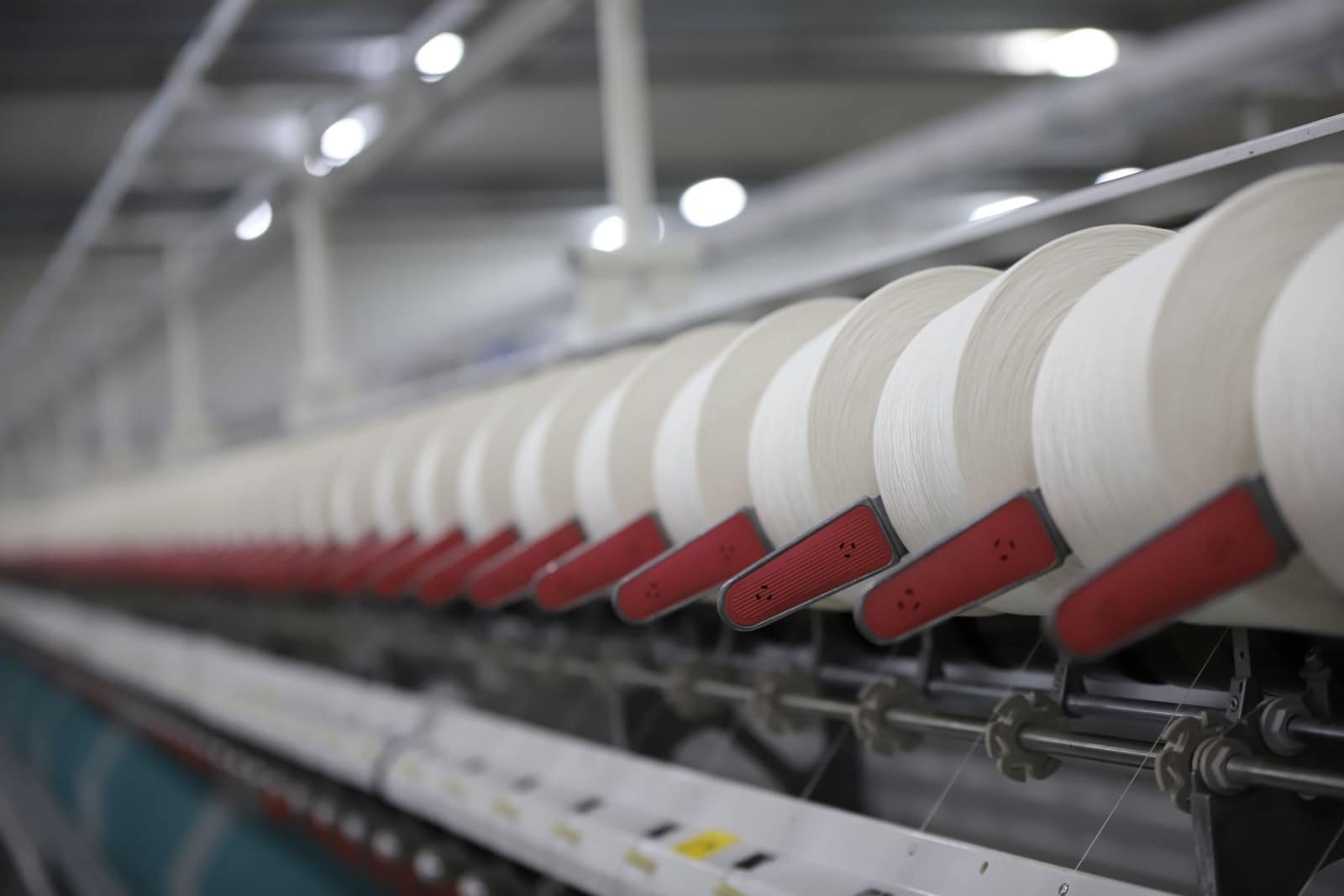 Free to exportTextiles & apparelCotton yarnBulk cotton yarn sold to weaving and knitting mills abroad; Bangladesh is by far the largest buyer.HS5205Exports 2025-26US$ 3.22 bn ↓4.1%
 Free to exportTextiles & apparelReadymade garmentsKnitted and woven clothing for brands and retailers; the USA, UK, UAE and the EU are the big buyers.HS6109.10Exports 2025-26US$ 15.8 bn ↓1.2%
 Free to exportTextiles & apparelHome textiles (bed, bath and kitchen linen)Bedsheets, towels and kitchen linen for retailers; the USA buys more than half of India's exports.HS6302Exports 2025-26US$ 2.01 bn ↓5.7%
 Free to exportTextiles & apparelHandloom productsHand-woven fabrics, stoles and furnishings; buyers pay for craft, story and certified handloom origin.HS6304Exports 2025-26US$ 1.75 bn ↓8.6%