


Textiles & apparel
Export handloom products
Hand-woven fabrics, stoles and furnishings; buyers pay for craft, story and certified handloom origin.
- HS code
- 6304 Other furnishing articles — cushion covers, bedspreads, throws, wall hangings. Handloom fabrics sit in Chapters 50–55 and handloom made-ups in Chapter 63; the 8-digit line shows whether it is handloom.
- Export policy
- Free to export Free to export. Made-ups qualify for RoSCTL; handloom fabrics and other goods outside Chapters 61–63 fall under RoDTEP — check your line.
- Registrations
- 4 IEC, GST and those below
- India’s exports, 2025-26
- US$ 1.75 bn to 166 countries
What is exported
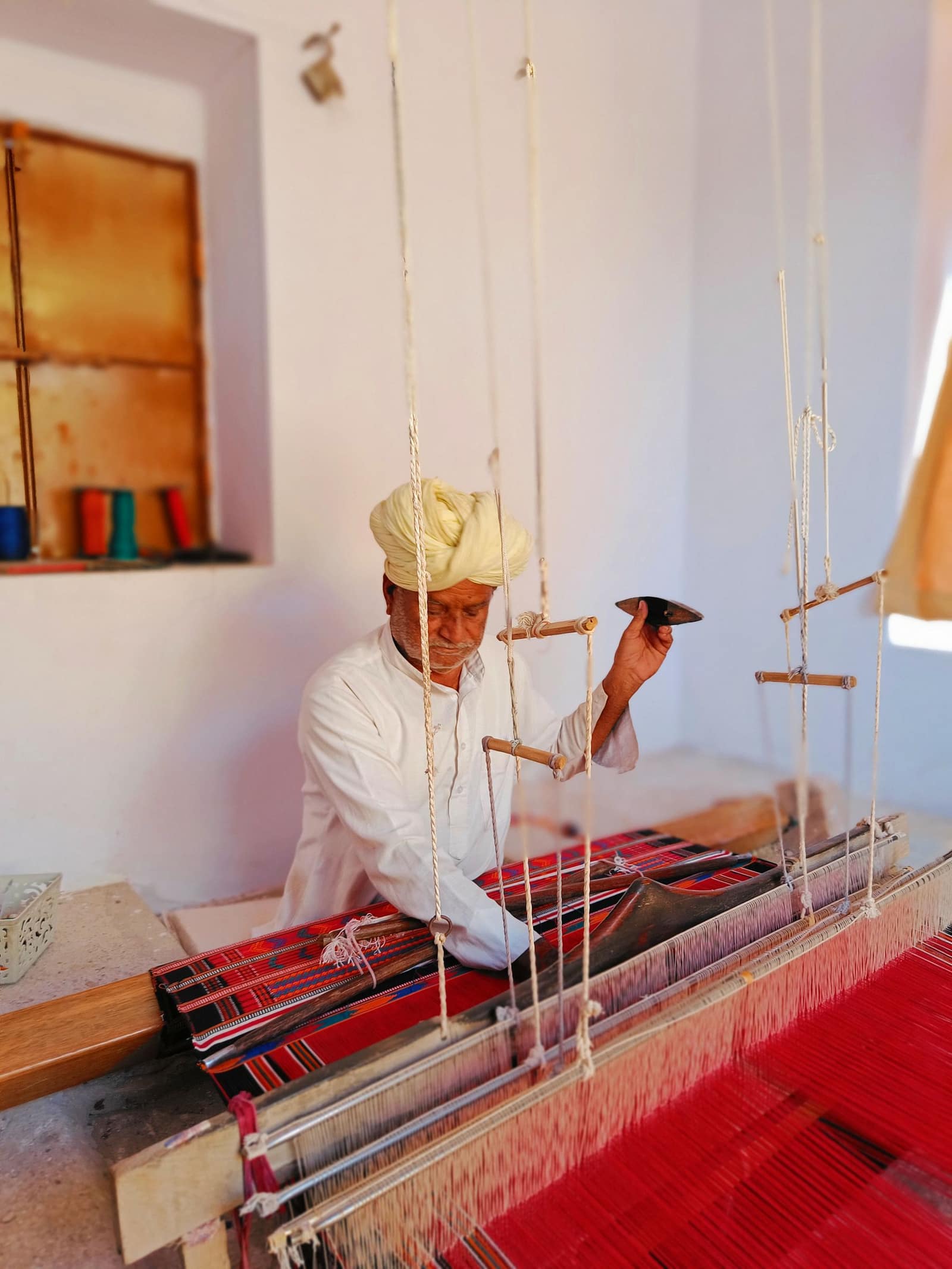
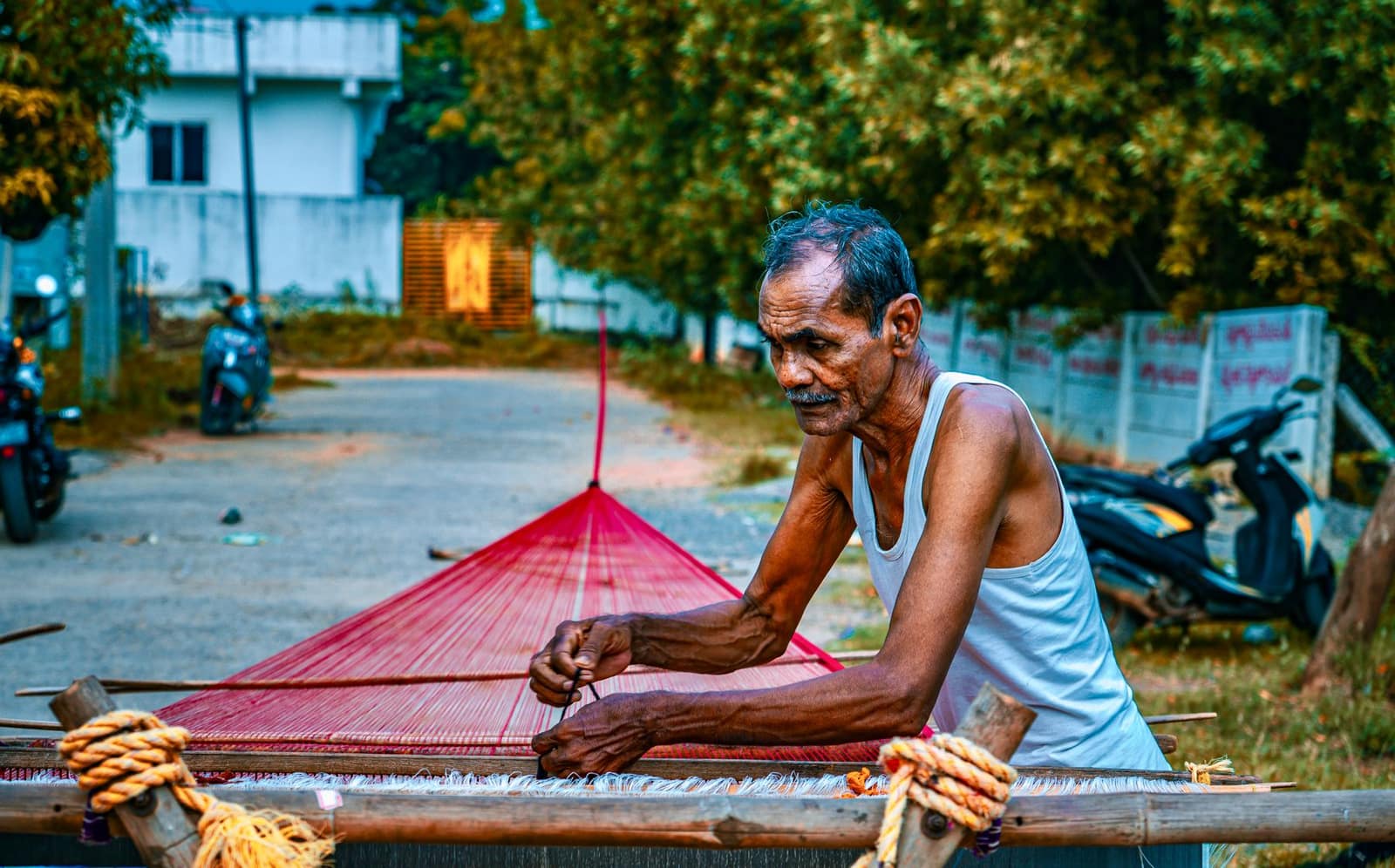
Handloom exports include cotton and silk sarees and fabrics, stoles, rugs and home furnishings from weaving clusters across India. Buyers are boutique importers, design stores and ethical-fashion brands, who value small batches and natural dyes. Commerce Department data do not separate handloom from mill-made goods at heading level; for HS 6304 as a whole the USA is the main buyer, followed by the UK, Germany, Canada and Australia.
Varieties, grades and forms
- Handloom furnishings — cushion covers, throws, curtainsThe main export line (HS 6304); Karur and Panipat handlooms make them for home-decor buyers.
- Handloom rugs and durriesFlat-woven cotton and wool durries from Panipat, Agra, Navalgund and Warangal.
- Handloom fabrics and yardageKhadi, ikat and jacquard fabric sold by the metre to designers and brands.
- Saris, stoles and scarvesBanarasi, Kanchipuram, Pochampally ikat and Chanderi — mostly to the Indian diaspora and fashion boutiques.
Where it is grown or made
- Tamil NaduKarur (made-ups), Kancheepuram (silk), Madurai
- HaryanaPanipat — handloom furnishings and durries
- Uttar PradeshVaranasi (Banaras brocades), Mirzapur and Agra (durries)
- Telangana and Andhra PradeshPochampally (ikat), Warangal (durries)
- KeralaKannur — handloom furnishings and fabrics
- West Bengal and OdishaNadia, Hooghly and Sambalpur — saris and fabrics
The quality buyers ask for
- Fibre and yarn
- Fibre content (cotton, silk, wool, linen, blends) and yarn counts for warp and weft
- Construction
- Ends and picks per inch, width (often narrower than mill fabric), GSM
- Colour fastness
- To washing, rubbing and light (ISO 105 series); natural dyes need extra testing as fastness varies
- Shrinkage
- Dimensional change after washing; handloom fabric often shrinks more, so pre-wash or state it
- Acceptable variation
- Slubs and slight colour variation are part of hand weaving; agree in writing what is a feature and what is a defect
Certificates
- Handloom Mark / India Handloom BrandOften askedGovernment marks that certify a product is hand-woven (and, for IHB, meets quality and zero-defect norms).
- Silk MarkOften askedLabel from the Silk Mark Organisation of India confirming pure silk.
- GI authorised userOften askedFor GI weaves such as Banarasi, Pochampally Ikat or Chanderi, register as an authorised user to use the GI name.
- GOTSOften askedFor organic cotton handloom, if the buyer sells it as organic.
- Fair-trade membership (WFTO or similar)Often askedSome ethical retailers buy only from fair-trade verified producer groups.
- OEKO-TEX STANDARD 100Often askedAsked for by some European buyers for fabric touching skin.
Shipping, storage and shelf life
Orders are often small: courier or air for samples and boutique lots, LCL sea freight for larger rolls and made-ups. Roll fabric on tubes and wrap in polythene and hessian or cartons.
Air or courier for small lots; sea LCL or FCL for bigger orders.
Keep silk and wool away from moisture and insects; use naphthalene-free insect protection if the buyer bans naphthalene.
What goes on the pack and carton
- Fibre content in the buyer country's required form, and care instructions suited to hand-woven fabric.
- 'Handwoven in India' only if true; add Handloom Mark, Silk Mark or GI logo only when registered.
- Roll or bale tags with quality name, length, width, colour and lot.
The Weavers' Service Centres of the Ministry of Textiles test fabric and help with design. For export test reports use an NABL-accredited textile lab (search 'textiles' on the NABL directory) or a textile research association such as NITRA, BTRA, SITRA or ATIRA. For silk purity, use the Silk Mark Organisation's testing.
Benefits of exporting this product
- RoSCTL instead of RoDTEP
Handloom made-ups such as furnishings fall under the RoSCTL scheme (garments in Chapters 61–62, made-ups in Chapter 63), not RoDTEP. The rebate comes as a transferable duty credit scrip, at the rates and value caps notified by the Ministry of Textiles (Notification 14/26/2016-IT (Vol.II), 8 Mar 2019). The scheme was extended to 30 Sep 2026 and a further extension to 31 Dec 2026 has been reported; we could not open the rate schedule, so check your rate and the current status on texmin.nic.in.
PIB — RoSCTL guidelines (apparel under Chapters 61–62 and made-ups under Chapter 63; rates of Notification 14/26/2016-IT (Vol.II) dated 08.03.2019) ↗ - Duty drawback: 3.0% of FOB
Drawback item 630401 (other furnishing articles of cotton) has an All Industry Rate of 3.0% of FOB, capped at ₹68.9 per kg, paid into your bank account. It is not available on exports under Advance Authorisation or from EOU/SEZ units. Check the current schedule on the CBIC drawback page before shipping.
Gazette of India — Notification 77/2023-Customs (N.T.) dated 20.10.2023: All Industry Rates of duty drawback, in force from 30.10.2023 ↗ - Registered GI tags
Pochampalli Ikat, Kancheepuram Silk, Banaras Brocades and Sarees, Chanderi Sarees, Navalgund Durries and Warangal Durries are registered Geographical Indications. Only registered producers and authorised users may sell under these names, which helps genuine makers stand out and fetch a better price.
IP India (Geographical Indications Registry) — Registration details of Geographical Indications ↗ - Zero duty into the UK (CETA)
The India-UK CETA came into force on 15 July 2026 and gives zero-duty access to nearly 99% of India's exports; the Commerce Ministry named textiles among the sectors that gain. Claim it with a CETA certificate of origin and check the line for your code on the UK Trade Tariff.
PIB — India-UK CETA enters into force (15 Jul 2026): zero-duty access for nearly 99% of India's exports ↗
Where to register
- HEPC (Handloom Export Promotion Council)RCMC for all handloom products: fabrics, home furnishings, carpets and floor coverings.hepcindia.com ↗
- India Handloom Brand / Handloom Mark (Ministry of Textiles)Optional quality and authenticity labels that help buyers trust the handloom claim.indiahandloombrand.gov.in ↗
Quality and checks
- Colour fastness and shrinkage tests, especially for natural dyes.
- Fibre and origin labelling for the buyer's market (FTC rules in the USA, EU textile labelling in Europe).
- Pure silk items may need silk-mark or test proof if the buyer asks; GI-tagged weaves (for example Banarasi) should use the GI name only if authorised.
Work with one weavers' cooperative or cluster and build a small range of stoles or cushion covers with photos of the weaving. Join HEPC, take part in an HEPC-supported fair, and sell small air or courier shipments to boutiques before taking container orders.
Where new exporters go wrong
- Calling powerloom goods "handloom". It misleads buyers and can cost you the right benefit rate and your reputation.
- Lead times: hand weaving is slow. Promise dates the weavers can actually meet.
- Natural dyes bleeding in the buyer's wash test — test before you ship.
Documents this product needs
Schemes that apply
- RoSCTL Rebate of State and Central Taxes and Levies
- RoDTEP Remission of Duties and Taxes on Exported Products
- Drawback Duty Drawback (All Industry Rates)
- MAI / MAS Market Access Initiative (now Market Access Support under EPM)
- ECGC ECGC export credit insurance for small exporters
- LUT Letter of Undertaking for zero-rated exports under GST
- Districts as Export Hubs Districts as Export Hubs
Sources (6)
- Department of Commerce, Export Import Data Bank — India's exports of HS 6304 by country, 2025-26
- DGFT — Appendix 2T: Export Promotion Councils and the products under each
- DGFT — ITC(HS) export policy search (Schedule 2)
- US FTC — Labeling requirements under the Textile and Wool Acts
- HEPC — official site
- Ministry of Textiles — India Handloom Brand
Trade data
Indian handloom products exports in numbers
From the Department of Commerce’s TradeStat, country by country. US$, Indian financial years (April–March).
- Exports in 2025-26
- US$ 1.75 bn -2% a year on average, 2020-21 to 2025-26
- Change from 2024-25
- ↓ -8.6% US$ 1.92 bn → US$ 1.75 bn
- Buyer countries
- 166
- Average export price
- US$ 3.25 per kg · 5,39,210 tonnes shipped · US$ 3.09 the year before
The price cycle
India’s average export price per kg each year (total value ÷ total quantity). Highest in 2025-26, lowest in 2022-23 — a 34% swing between them. Keep this swing in mind when you quote.
What next: a projection from the trend
The past trend carried forward — not a forecast by any authority. Sudden changes in policy, prices or demand are not in it.
Likely range US$ 1.53 bn to US$ 1.93 bn.
- Trend
- -2.3% a year
- Fit (R²)
- 0.3 — weak, read with care
- Based on
- 6 years of official figures
Method: a straight line through the logarithm of yearly exports (log-linear regression); range = ±1 standard error.
Biggest buyer countries
By value in 2025-26. Change is against 2024-25.
Where demand is rising and falling
Only countries that buy at least US$ 1 million or 1% of India’s exports of this product. Change from 2024-25 to 2025-26.
↑ High demand
↓ Low demand
- DR CongoUS$ 22.7 mn → US$ 6.9 mn↓-69.5%
- AustraliaUS$ 68.1 mn → US$ 50 mn↓-26.5%
- CanadaUS$ 68.3 mn → US$ 54.2 mn↓-20.6%
- GermanyUS$ 69.8 mn → US$ 56.9 mn↓-18.5%
- IsraelUS$ 30.6 mn → US$ 25 mn↓-18.1%
- NetherlandsUS$ 29.8 mn → US$ 25.7 mn↓-13.7%
- United States of AmericaUS$ 1.06 bn → US$ 933 mn↓-12.3%
- United Arab EmiratesUS$ 30.6 mn → US$ 27.4 mn↓-10.5%
Which forms sell, and at what price
India’s exports by 8-digit tariff line, 2025-26. Average price = total value ÷ total quantity (TradeStat): the average of every shipment on that line, not the price of any one deal.
| Tariff line | Value 2025-26 | Change | Quantity | Average price |
|---|---|---|---|---|
Bedsheets and bed covers of cotton6304 19 10 · Bedspreads, not knitted or crocheted | US$ 616 mn | ↓-16.7% | 50.6 mn pieces | US$ 12.15 per piecewas US$ 13.19 |
Terry towel of cotton, ntkntd/crocheted6304 92 50 · Furnishing articles, of cotton, not knitted or crocheted | US$ 191 mn | ↓-6.7% | 163 mn pieces | US$ 1.17 per piecewas US$ 1.04 |
Other bedsheets and bed covers n.e.s.6304 19 90 · Bedspreads, not knitted or crocheted | US$ 140 mn | ↑+2.2% | 16.7 mn pieces | US$ 8.41 per piecewas US$ 8.42 |
Other pillow cases and pillow slips6304 92 39 · Furnishing articles, of cotton, not knitted or crocheted | US$ 128 mn | ↑+16.2% | 60.3 mn pieces | US$ 2.12 per piecewas US$ 2.63 |
Other furnishing articles nec6304 99 99 · Furnishing articles, of textile materials other than cotton or synthetic fibres, not knitted or crocheted | US$ 122 mn | ↓-8.1% | 26.9 mn pieces | US$ 4.54 per piecewas US$ 5.01 |
Bed nets specified in sub-heading note 1 to this chapter6304 20 00 · Furnishing articles, excluding those of heading no. 9404, bed nets, specified in Subheading Note 1 to this… | US$ 95.4 mn | ↑+64.7% | 45.5 mn pieces | US$ 2.10 per piecewas US$ 2.05 |
Furnishing articles, of cotton, not knitted or crocheted — other cushion covers6304 92 89 | US$ 83.5 mn | ↓-1.1% | 29.1 mn pieces | US$ 2.86 per piecewas US$ 2.68 |
Furnishing articles, of cotton, not knitted or crocheted — other furnishing acricles6304 92 99 | US$ 57.7 mn | ↓-21.3% | 16.4 mn pieces | US$ 3.51 per piecewas US$ 3.18 |
Other table cloth and table covers6304 92 49 · Furnishing articles, of cotton, not knitted or crocheted | US$ 56.1 mn | ↓-18.5% | 13.3 mn pieces | US$ 4.22 per piecewas US$ 4.41 |
Towel orht thn terry of cotton, ntkntd/crcht6304 92 60 · Furnishing articles, of cotton, not knitted or crocheted | US$ 52.9 mn | ↓-34.7% | 43.1 mn pieces | US$ 1.23 per piecewas US$ 1.01 |
Other furnishing articles of synthetic fibres,not knitted or crocheted6304 93 00 · Furnishing articles, of synthetic fibres, not knitted or crocheted | US$ 42.6 mn | ↓-9.2% | 8.2 mn pieces | US$ 5.20 per piecewas US$ 5.25 |
Bedsheets and bed covers of man-made fibres6304 19 30 · Bedspreads, not knitted or crocheted | US$ 32 mn | ↑+53.9% | 4.6 mn pieces | US$ 7.01 per piecewas US$ 7.33 |
Furnishing articles, of cotton, not knitted or crocheted — other napkins6304 92 29 | US$ 31.5 mn | ↓-27.9% | 28.5 mn pieces | US$ 1.11 per piecewas US$ 0.81 |
Others-of-other furnishing articls,knitted/crocheted6304 91 90 · Furnishing articles, excluding those of heading no. 9404 in heading 6304, knitted or crocheted | US$ 30.8 mn | ↓-9% | 6.0 mn pieces | US$ 5.11 per piecewas US$ 7.18 |
The world market
Each country’s own recorded exports and imports in UN Comtrade, 2023 (the latest year nearly every country has reported).
- World imports
- US$ 3.44 bn 2023
- India among exporters
- #2 of 148 countries
- India’s share of world exports
- 33.2% US$ 1.85 bn
- Left for others to win
- US$ 3.72 bn exported by other countries
Top exporters — your competitors
- 1ChinaUS$ 2.25 bn 40.4%
- 2IndiaUS$ 1.85 bn 33.2%
- 3TürkiyeUS$ 234 mn 4.2%
- 4Viet NamUS$ 133 mn 2.4%
- 5GermanyUS$ 116 mn 2.1%
- 6SpainUS$ 86.2 mn 1.5%
- 7PolandUS$ 75.1 mn 1.3%
- 8MexicoUS$ 53.1 mn 1%
- 9DenmarkUS$ 47.1 mn 0.8%
- 10RomaniaUS$ 46.6 mn 0.8%
Biggest buyers in the world
- 1USAUS$ 786 mn 22.9%
- 2GermanyUS$ 211 mn 6.1%
- 3FranceUS$ 185 mn 5.4%
- 4United KingdomUS$ 129 mn 3.7%
- 5JapanUS$ 115 mn 3.4%
- 6Dem. Rep. of the CongoUS$ 103 mn 3%
- 7SpainUS$ 87.6 mn 2.5%
- 8ItalyUS$ 79.5 mn 2.3%
- 9IndiaUS$ 76.5 mn 2.2%
- 10PolandUS$ 68.7 mn 2%
Opportunity: what these countries buy from the world, and from India
Each country’s own recorded imports in UN Comtrade, latest year it has reported. The long light part of each bar is demand other countries are filling today.
Trade data cannot separate handloom from mill-made furnishings. TradeStat’s 2023-24 quantities are double-counted, so that year is left out of the price. Sources: TradeStat — Export Import Data Bank, Department of Commerce · UN Comtrade database (United Nations Statistics Division) · Figures taken 29 October 2026.
Step by step
How to export handloom products
India has the world's largest handloom sector, and hand-woven cotton, silk and wool fabrics are a part of its exports that few countries can match at scale. Competition comes from power-loom copies at home and abroad, and from hand-woven goods from Bangladesh, Nepal, Indonesia and Vietnam. Demand comes from designers, slow-fashion labels and interior shops that value hand-made, natural-fibre products with a story. Openings are in small-batch orders for boutiques and designers, GI-tagged weaves, and handloom home furnishings sold as sustainable products.
- 01Work with a weaver group
Tie up with a cooperative, producer company or master weaver who can repeat a design.
- 02Make a swatch book
Prepare swatches with fibre, width, GSM and price per metre; photograph the weaving process for buyers.
- 03Agree tolerance for hand-made variation
Write down acceptable slubs, colour variation and width tolerance.
- 04Advance for yarn
Ask the buyer for an advance to buy yarn and pay weavers on time — weavers cannot wait months for payment.
- 05Weave, wash and test
Weave, pre-wash if agreed, and test colour fastness — especially for natural dyes.
- 06Pack, document and ship
Pack rolls, prepare invoice and packing list, and file the shipping bill under the right handloom line.
- 07Collect balance
Collect the balance against documents; for repeat buyers, consider ECGC cover before giving credit.
Meet buyers
Trade fairs
- January (next: 12–15 January 2027) — check datesHeimtextilFrankfurt, Germanyheimtextil.messefrankfurt.com ↗
- Twice a year: spring (next: 15–19 March 2027) and autumn (October)IHGF Delhi Fair (EPCH)Greater Noida, Indiaihgfdelhifair.in ↗
- Next: 31 March–3 April 2027Bharat TexNew Delhi, Indiabharat-tex.com ↗
- January and September — check datesMaison&ObjetParis, Francemaison-objet.com ↗
Questions
Questions about exporting handloom products
How do I prove the fabric is hand-woven?
What minimum order should I accept?
Natural dyes faded in the buyer's test. What now?
Is there a council for handloom exporters?
Can I use a GI name like 'Banarasi' on my label?
Sources (7)
- HEPC (Handloom Export Promotion Council) — official site
- India Handloom Brand — Ministry of Textiles
- Silk Mark Organisation of India
- Global Organic Textile Standard (GOTS)
- OEKO-TEX — STANDARD 100
- NABL — search for accredited testing laboratories
- EUR-Lex — Regulation (EU) No 1007/2011 on textile fibre names and labelling
Who buys Indian handloom products
All countries → USDWashington, D.C.United States of AmericaIndia's largest single-country export market. Strict FDA rules for food; extra 10% US duty on most goods since July 2026.From India 2025-26US$ 87.3 bn
 CETAGBPLondonUnited KingdomNew CETA in force since July 2026 — most Indian goods now enter duty-free. Strong market for garments, food and engineering.From India 2025-26US$ 13.4 bn
 EURBerlinGermanyEurope's largest economy and India's biggest EU partner. Values quality, certificates and supply-chain transparency.From India 2025-26US$ 11.5 bn
 CADOttawaCanadaLarge Indian diaspora market. Importer needs a CFIA licence for food; labels in English and French.From India 2025-26US$ 4.67 bn
 ECTAAUDCanberraAustraliaZero duty on all Indian goods since Jan 2026 — but some of the world's strictest biosecurity rules.From India 2025-26US$ 7.28 bn
 EURMadridSpainGrowing EU buyer of Indian garments, seafood, chemicals and auto parts; Valencia and Algeciras are key ports.From India 2025-26US$ 6.96 bn
 EURParisFranceFashion, food and design market. EU rules plus French-language labels; SIAL Paris is a key food fair.From India 2025-26US$ 7.1 bn
 DKKCopenhagenDenmarkSmall, wealthy Nordic market. Buys Indian garments, home textiles, machinery parts and shipping-related goods.From India 2025-26US$ 966 mn
More in textiles & apparel
All products → Free to exportTextiles & apparelCotton yarnBulk cotton yarn sold to weaving and knitting mills abroad; Bangladesh is by far the largest buyer.HS5205Exports 2025-26US$ 3.22 bn ↓4.1%
 Free to exportTextiles & apparelReadymade garmentsKnitted and woven clothing for brands and retailers; the USA, UK, UAE and the EU are the big buyers.HS6109.10Exports 2025-26US$ 15.8 bn ↓1.2%
 Free to exportTextiles & apparelHome textiles (bed, bath and kitchen linen)Bedsheets, towels and kitchen linen for retailers; the USA buys more than half of India's exports.HS6302Exports 2025-26US$ 2.01 bn ↓5.7%
 Free to exportTextiles & apparelCarpets and rugsHand-knotted, tufted and flat-woven rugs from Bhadohi, Jaipur and Panipat; the USA buys over half.HS5701Exports 2025-26US$ 1.97 bn ↓5.9%